
Second rarest of all AMC cars
One of the reasons I love AMC is that, as the underdog of American car manufacturers, and with limited funds for development and marketing, it consistently came up with a conversation-starter in the automotive arena. Case in point is this week’s spot, a 71 AMC Hornet SC 360, which I found at the Kenosha Homecoming event this past July.

Introduced in October 1969, the Hornet replaced the Rambler American and was somewhat overshadowed by its platform-sharing corporate sibling, the Gremlin. Response from the automotive press to the Hornet was meh, but at Car and Driver, it was super. In their Hornet preview in the September ’69 issue, the editors called out AMC CEO Roy Chapin Jr.’s approach. “Chapin has shown that he understands the essential difference between small cars and economy cars,” they wrote. “Mavericks and VWs are economy cars. The Hornet is a small car.” AMC took that premise and ran with it, using the story at length in full-page ads and dubbing the Hornet “the little rich car.”
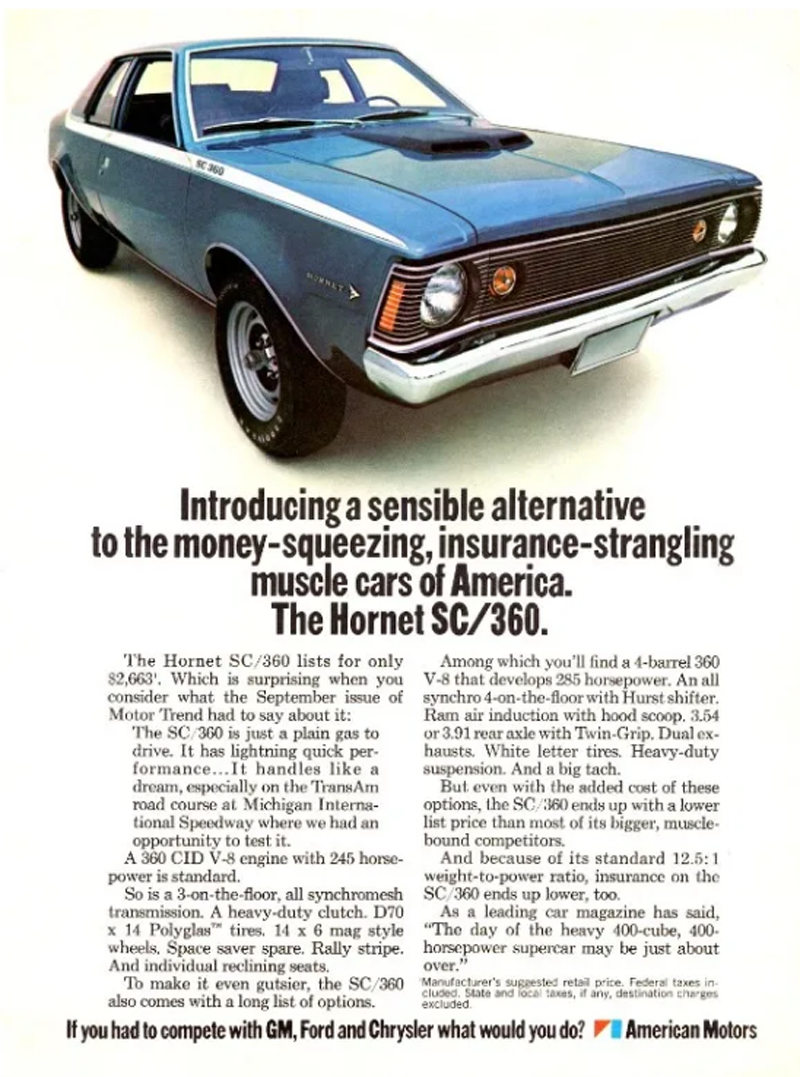
Of course, like many other AMC cars of the day, they managed to reach into its parts bin and shoehorn its 360 V8 in the Hornet, creating yet another muscle car on the cheap, creating the Hornet SC/360 in 1972, intended as a successor to the 1969 SC Rambler. For just $2,663, takers got the following:
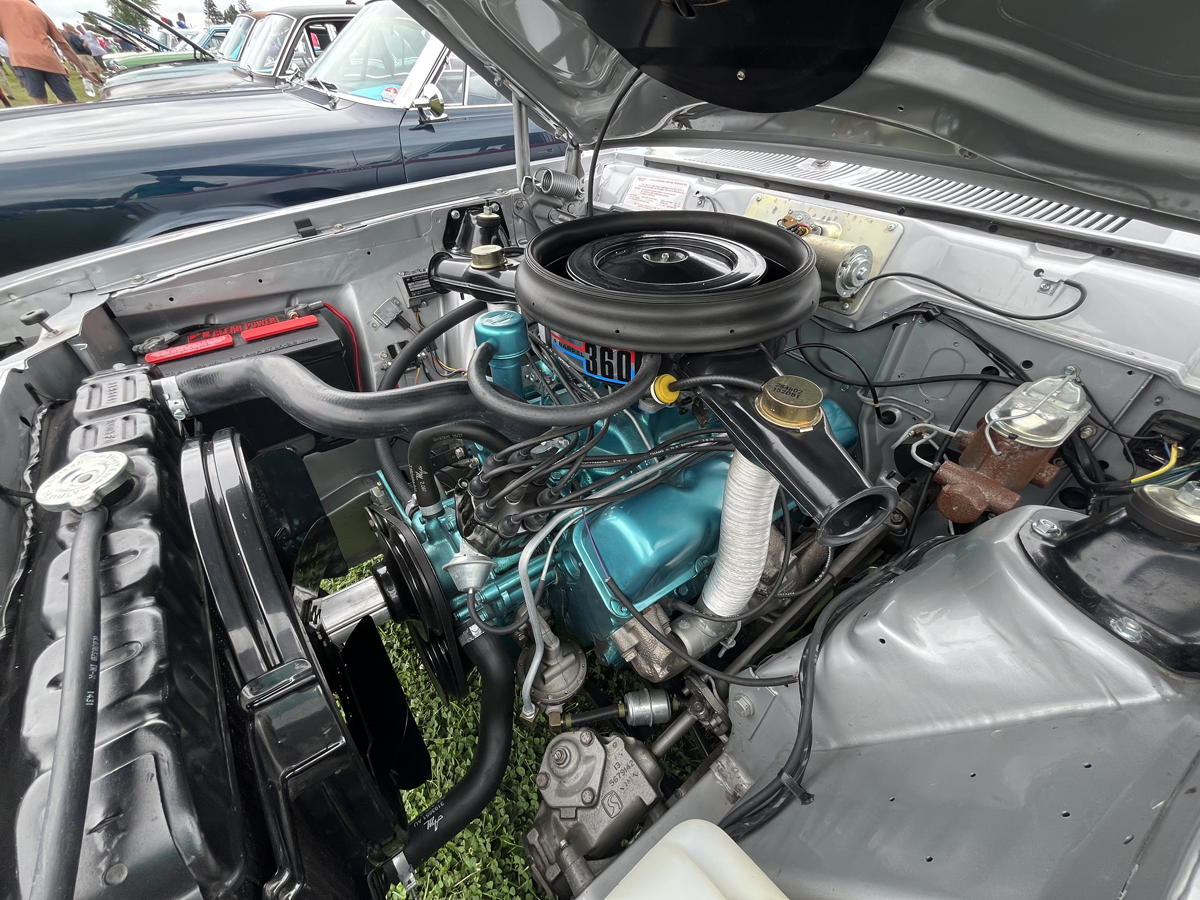
245 hp with a two-barrel carb, or 285 hp with the optional Go-Package’s $199 option, four-barrel carb, and ram-air hood scoop. Body striping, styled wheels, and individual reclining front seats. 14-inch mag wheels and Goodyear Polyglass tires, plus an optional handling package. Dual exhaust. Standard Borg-Warner T-15 three-speed manual, or optional Hurst-shifted four-speed manual.

Here’s the thing. Straight from the showroom floor, the 3,057-pound SC/360 could do 0 to 60 mph in a respectable 6.7 seconds and ran the quarter mile in 14.8 seconds at 95 mph. Owners soon discovered that with a bit of tuning of the carb and distributor, it could be even faster. Car Craft magazine tested this while adding aftermarket headers, traction bars, and slicks. The test yielded multiple quarter-mile runs in the high 13s.

AMC had high hopes for the little pocket rocket, hoping to have 10,000 units roll down the Kenosha assembly line, but in the end, high insurance premiums led to the SC/360’s cancellation after only one year of production.


So what are they worth now? First off, good luck in finding an owner who wants to part with theirs. It all depends heavily on its condition and specific features, with a range from approximately $10,000 for a restoration project to $55,000 or more for a low-mileage, high-concours example. Hagerty provides a broad estimate of $34,700–$64,200 for a good condition 1971 SC/360 with a 4-speed manual transmission,
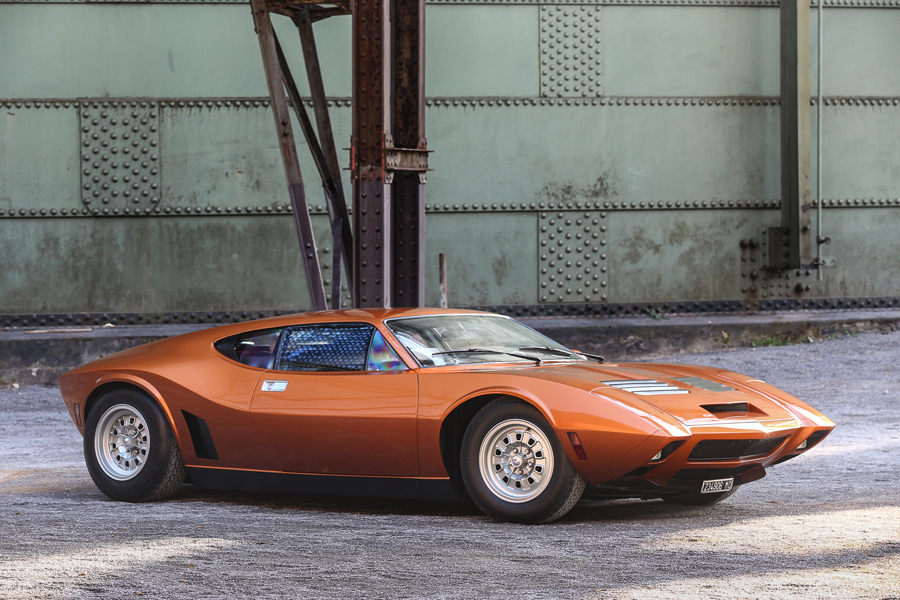
This was just one of many outstanding examples of AMC’s ingenuity at the event and have more to come. Have a great weekend, and stop by next Sunda,y where I’ll share one of my finds along with some of its history. Oh, and the rarest AMC, which I’ve never seen in person, is the AMX III, what would have been a halo car for AMC had it made it into production. Only a handful were actually built and in good shape are now seven figure cars.
 Savage On Wheels
Leave a comment