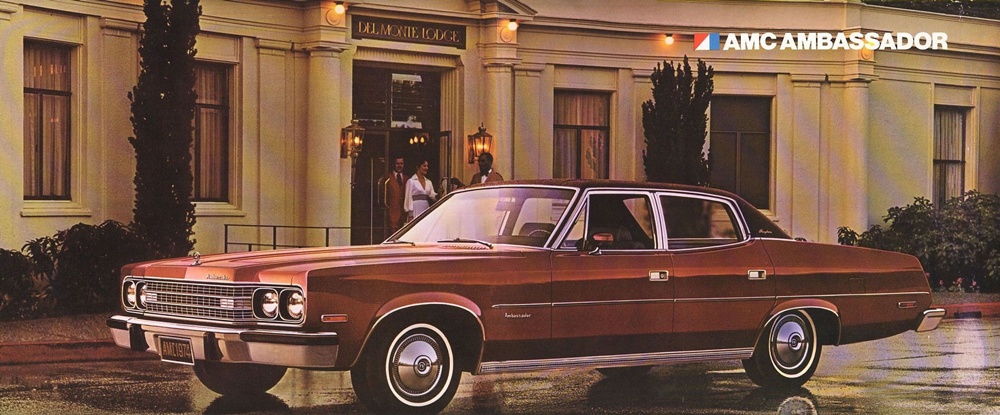
I’m going to give you a bit of automobile trivia that you can use, and I’m betting that no one else will have the answer to the question: What is the longest-running nameplate in automobile history? If you guessed Ambassador, you would be correct. Disclaimer: My dad worked as Transportation Manager at the AMC National Parts Distribution Center in Milwaukee for 27 years, and yes, I’m an AMC geek.
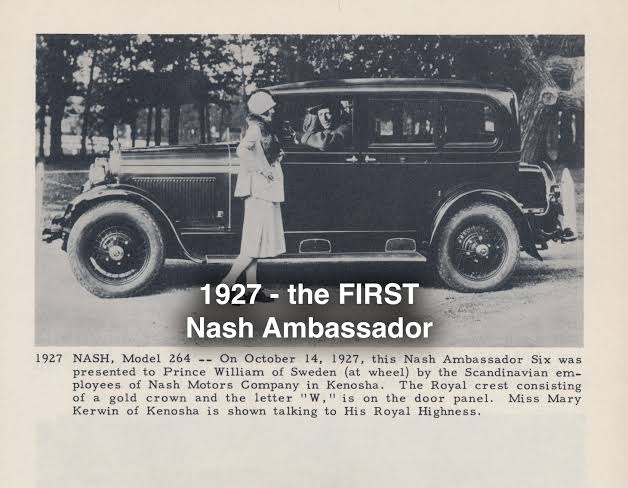
While it was last produced by American Motors, it was first introduced by Nash, which later merged with Hudson to become American Motors, in 1927. The Ambassador name first appeared as an upscale, high-trim four-door sedan variant of the Nash Advanced Six. While the image in the ad is probably only recognizable to Nash fans, better known is the Bathtub. Led by engineering VP Nils Wahlberg, Nash used full-sized plaster models in wind tunnels long before drag coefficients became a standard industry focus. The distinct fastback “bathtub” shape featured enclosed front wheels, and the interior boasted front seats that folded flat into a double bed, heavily marketed for road-trip travel. Sometimes nicknamed the “Kenosha Duesenberg” for its high quality and assembly in Kenosha, Wisconsin.
Over the years, it alternated between a full-size car from 1957–1961, a mid-size car from 1962–1966, and then back to a full-size car again from 1967 through 1974. Remember, AMC was going through a lot of changes from 67 to 74. It worked at shaking the Rambler’s stodginess by introducing the Javelin and AMX. It also remained competitive in small cars with the Gremlin and Hornet while its only big cars were the 4-door Matador and Ambassador, going up against the Big Three in an arena where they wasted time and resources.
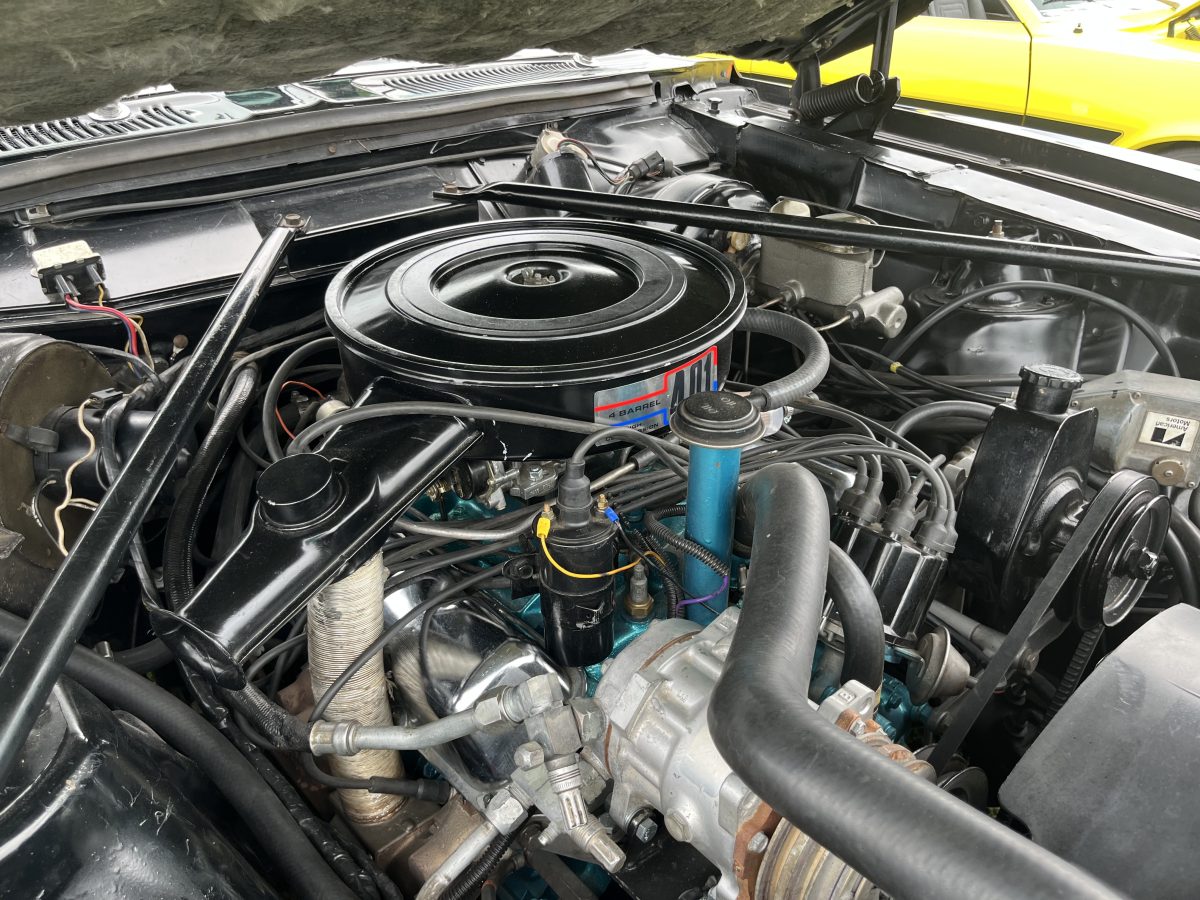
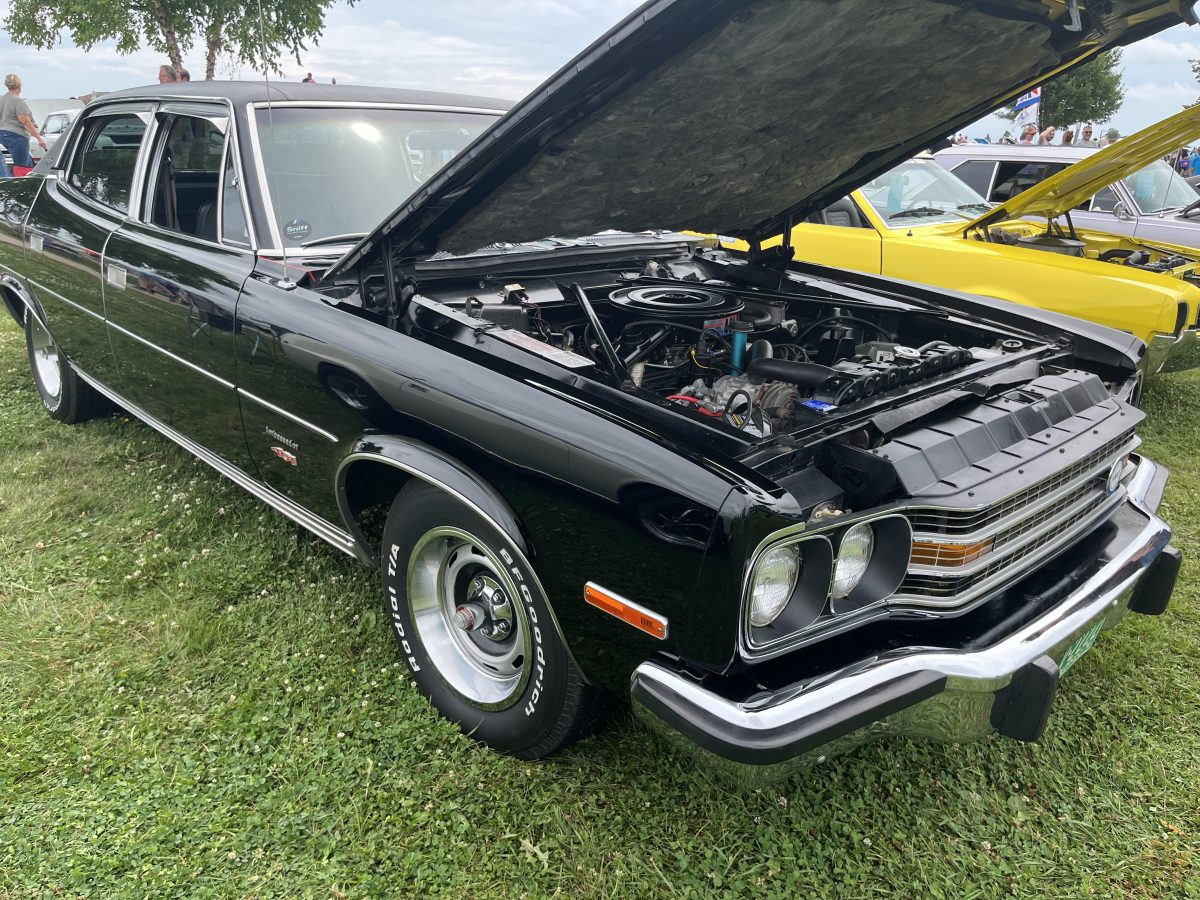
Still, they put out a decent product; starting with the 1968 model year, AMC made air conditioning standard equipment on all Ambassadors, a first for an American car manufacturer. They also offered lots of engine options, ranging from efficient inline-six engines up to powerful V8 options like the 290, 327, 343, 360, and 401. And no, that 327 was not made by Ford or Chevy, it was AMC’s own.
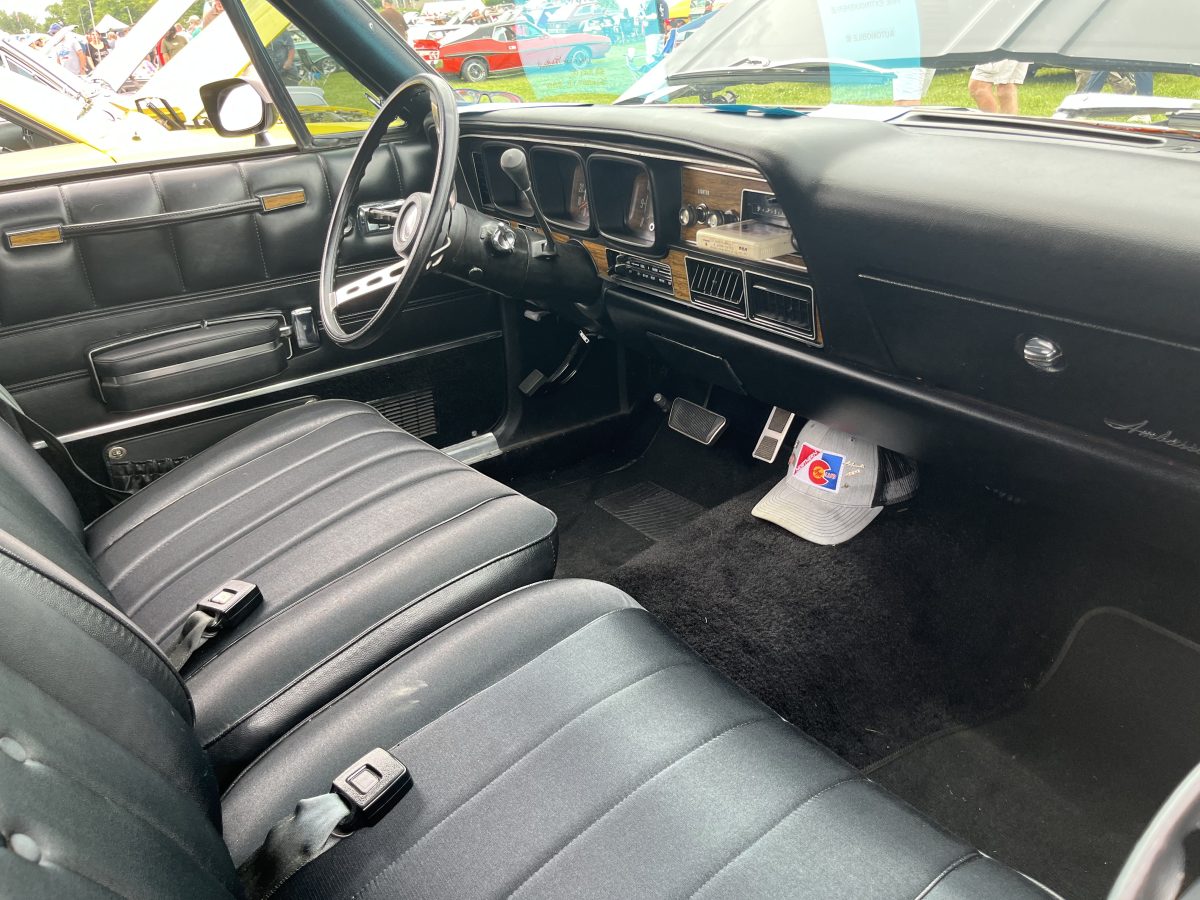
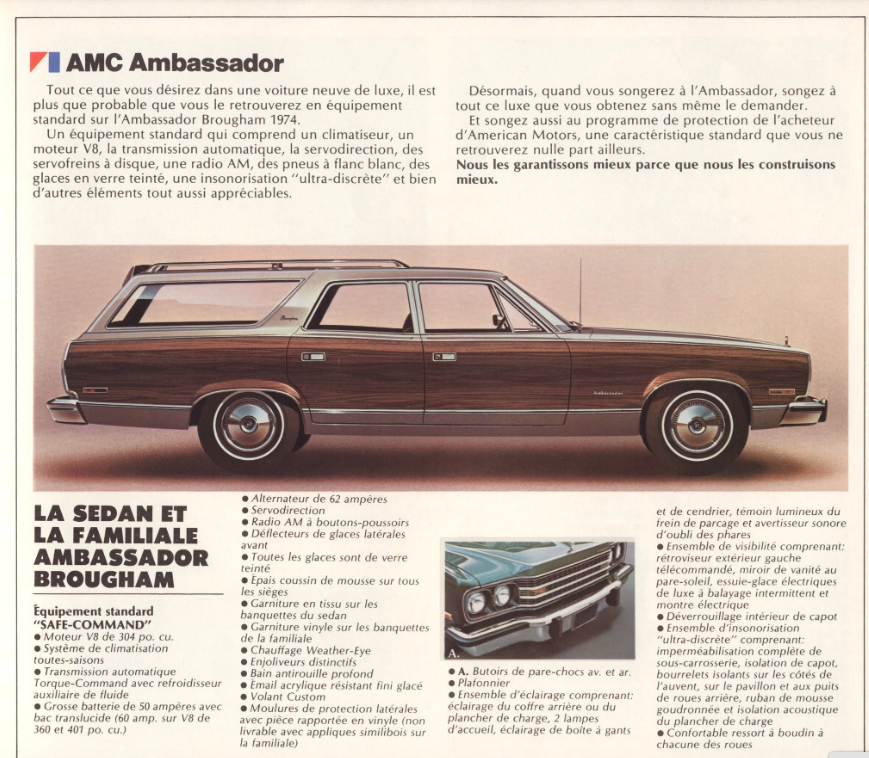
By 1974, the Ambassador essentially was a Matador intermediate sedan with the wheelbase stretched from 118 to 122 inches. But while the Matador was offered with a standard inline six and basic trim, the Ambassador came loaded with a choice of V8s, air conditioning, power steering, and power brakes all standard, along with premium interior fabrics and convenience features. A Matador with all the boxes on the option list pre-checked for your convenience.
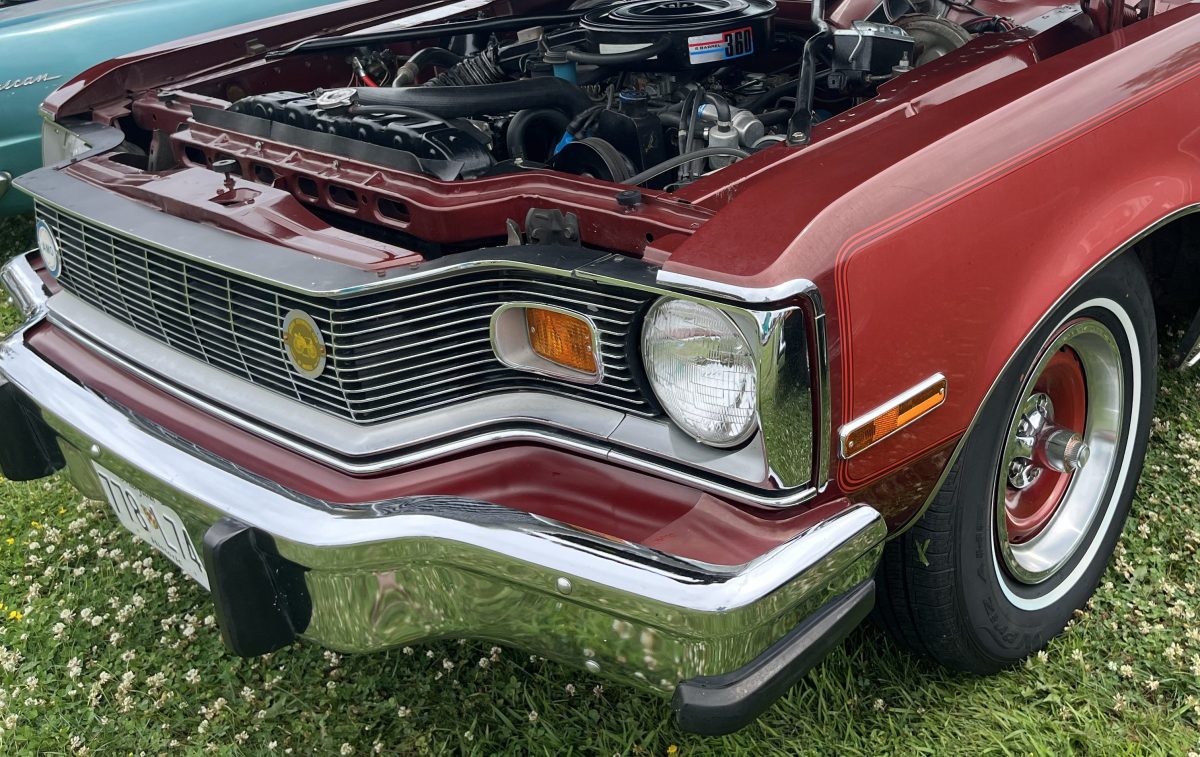
There were just two body styles offered for ’74: a four-door sedan and a four-door wagon. There was no two-door because the Matador coupe had just been introduced. Because of increasingly stringent federal impact standards, the car was treated to new front-end styling with increased overhang and a robust DOT bumper, so the Ambassador happens to be a one-year look in its final production year. If you think this looks odd, the Matadors, with the exception of the 2-door coupe, looked worse. Nicknamed the “coffin nose” or sometimes the “Jimmy Durante” nose. That’s my opinion, shared with other AMC aficionados. Affordably priced around $ 4,500, in Pontiac/Oldsmobile territory, but the Ambassador had relatively few takers except for maybe AMC loyalists, and that wasn’t enough. Production amounted to just short of 25,000 cars, a minor fraction of AMC’s total volume of 500,000+ cars that year.
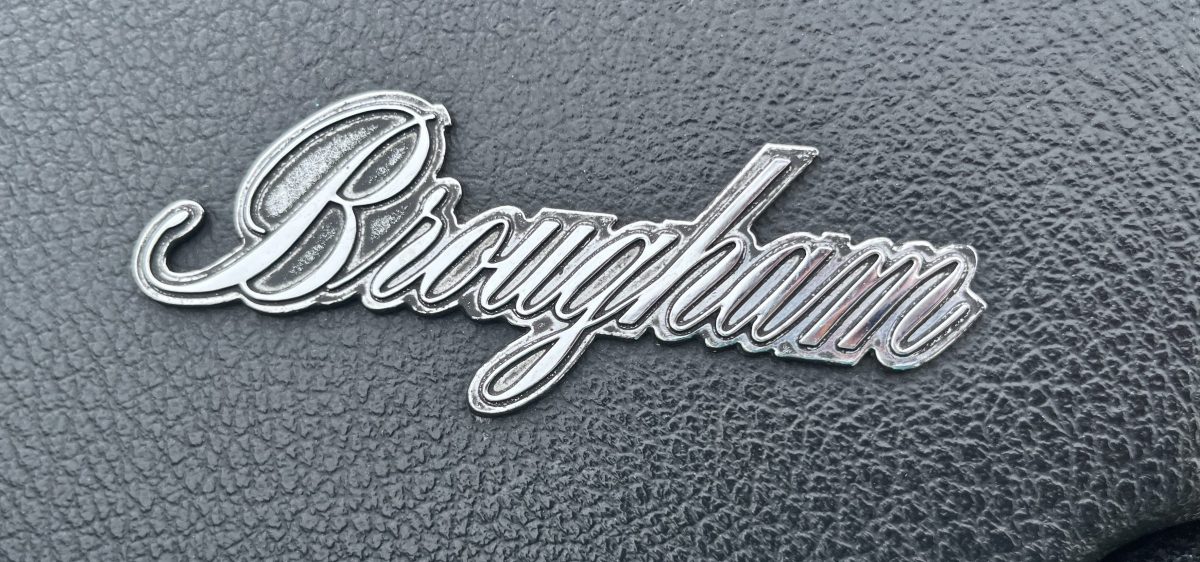
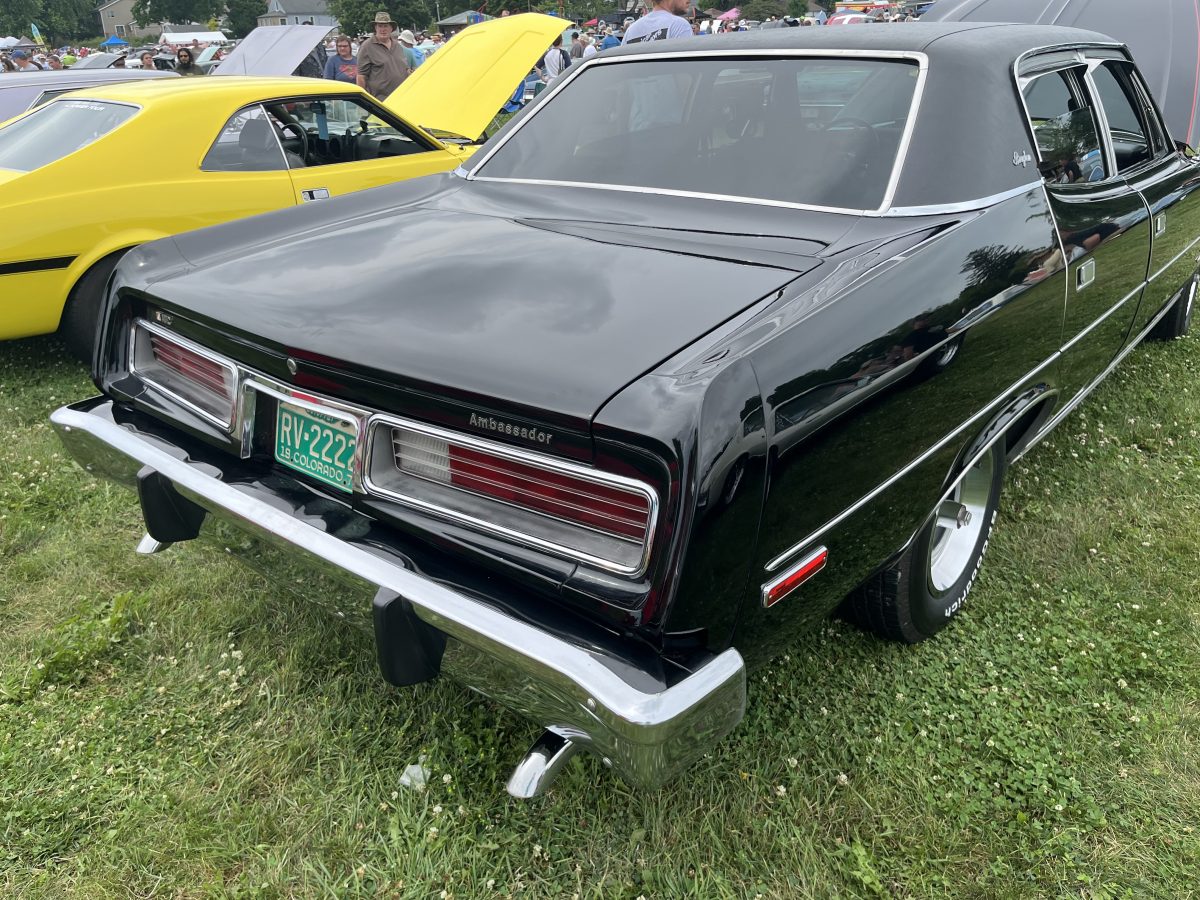
The final Ambassador rolled down the production line in Kenosha, Wisconsin, in June of 1974, signaling the end of American Motors’ entry into the big-car market forever. A segment they should have left long before that. After trying to sell the public on AMC being a full-line manufacturer, the company was retreating back to the niche segments, and in a few years the AMC product line would include the Pacer, Spirit, and four-wheel-drive Eagle passenger cars. I’m proud to say I owned one of each. So let’s say you got the bug and wanted to grab one of these gems. It’s OK, I won’t tell. Expect to pay 10 grand or less for one that’s in really good shape and, at the same time, own a piece of automotive history.
Thanks for stopping by and checking out my latest find. I’ve tons more unusual ones to share in future posts. Make sure to Comment, Like, Share this blog entry. Have a great week ahead.


Leave a Reply