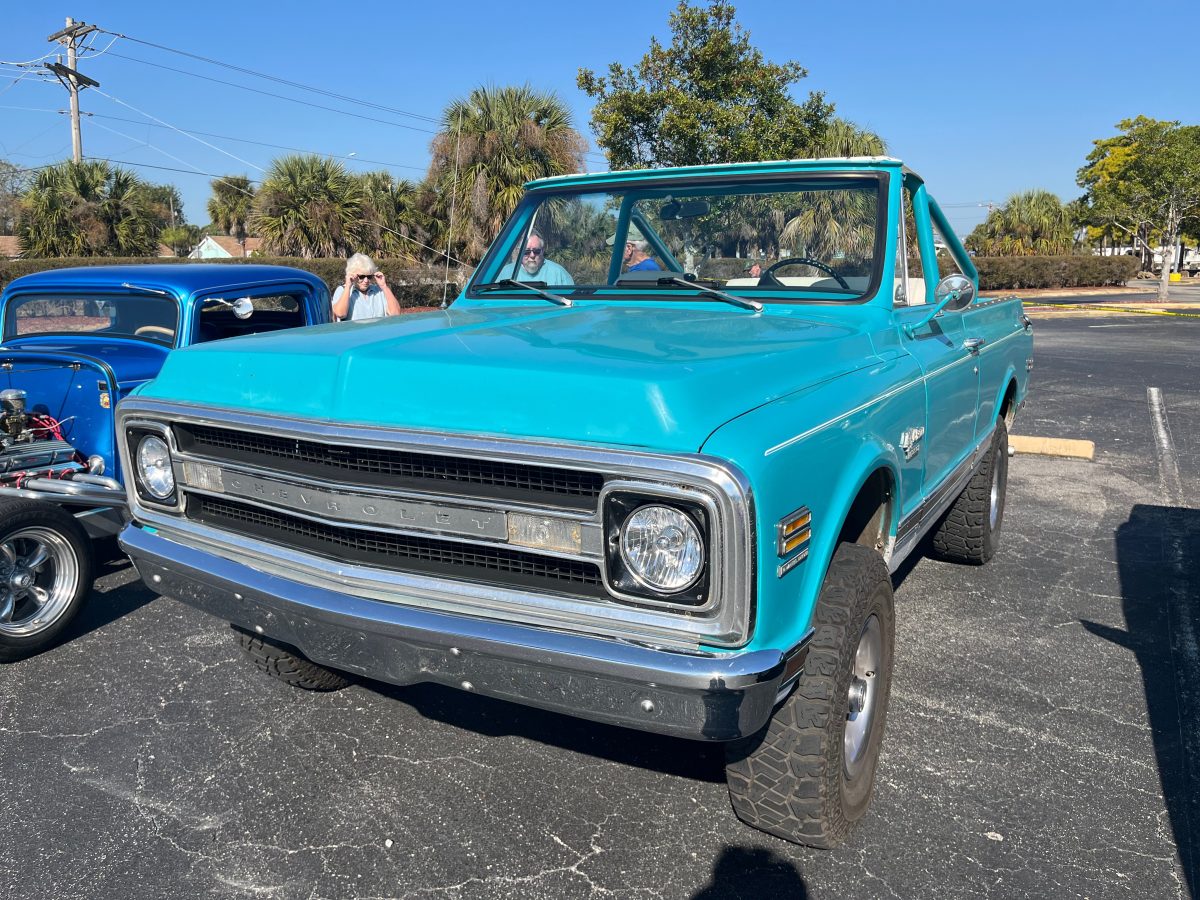
More than just a pretty drop-top
Once the weather warms up here in Wisconsin, I love going topless. Whoa there, this is a G-rated blog entry, and you wouldn’t want to see my dad bod without a shirt on. I’m talking about car owners who drop the top on their vehicles, like this week’s spot, a first-generation Chevy K5 Blazer.
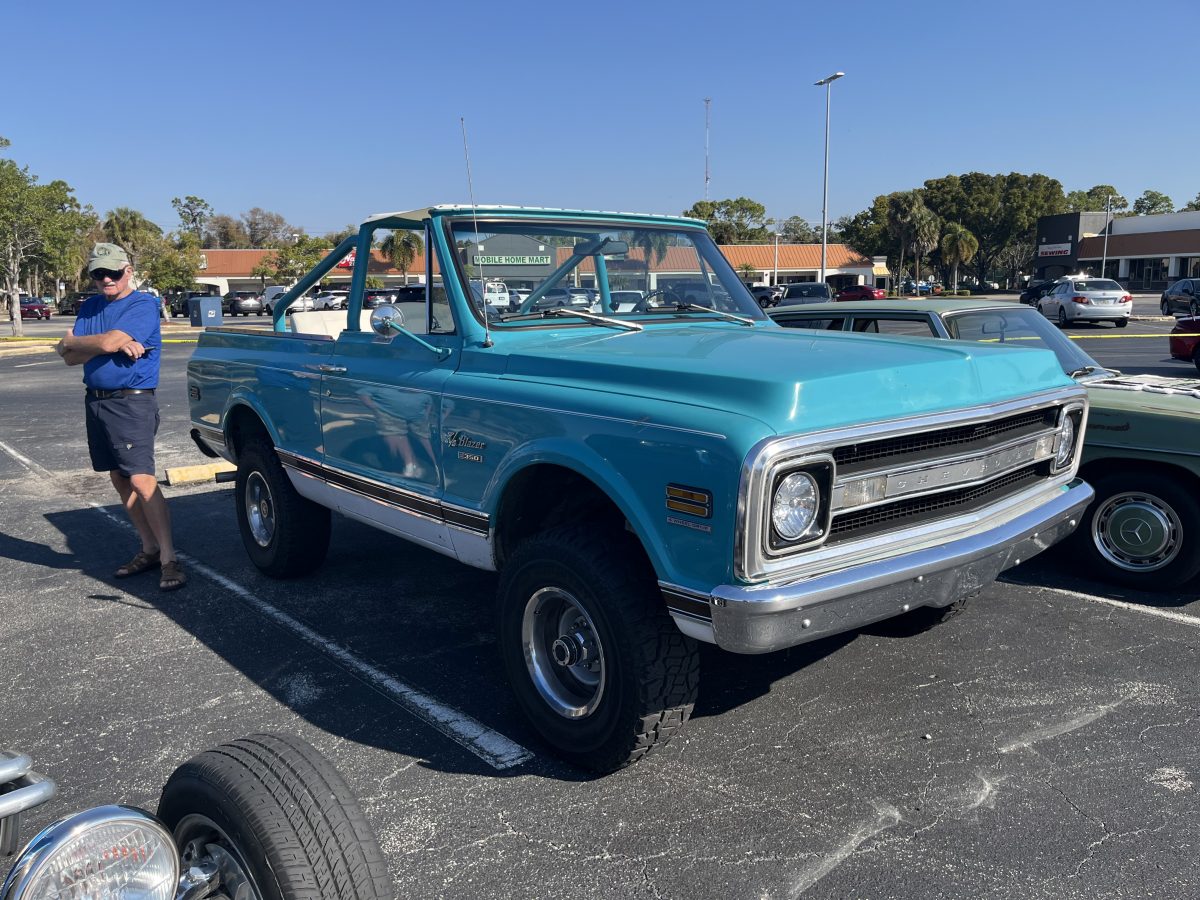
It was 54 years ago next month that Chevy set the tone that sort of kicked off the monster SUV craze. It sure earned its name. Brock Yates wrote about his first encounter with the K5 Blazer in Car and Driver magazine’s April 1970 issue. “Think of it as a beginning,” he opened his piece. “Nobody really understands the dimensions of the recreational market, and Chevrolet has to be forgiven for not working harder with the Blazer. After all, no one has done much to exploit this area of enthusiasm, which may well overwhelm all other forms of vehicular fancy, and therefore Chevrolet can share no more of the guilt than Ford and Chrysler.” Yates was also correct in pegging that first Blazer as a low-effort thing. It’s a parts bin of existing components like a shortened half-ton truck chassis, six- and eight-cylinder engines, and the trim and styling were lifted from the pickup line, keeping development costs low.
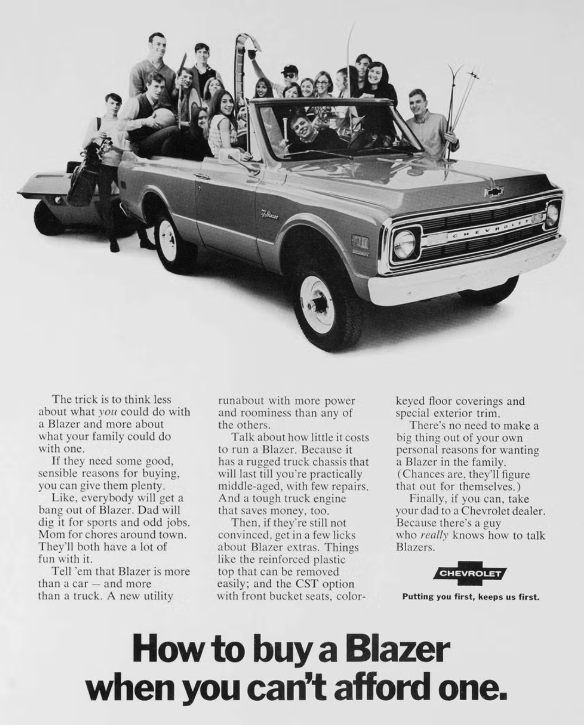
In March 1969, The New York Times ran a small article previewing the K5 Blazer. “The Blazer,” the story reported, “according to the Chevrolet Motor Division of the General Motors Corporation, has features requested by customers in a survey conducted last year. It was designed, Chevrolet said, as a simple, basic open unit with a single seat for the driver. The buyer can tailor the unit to his recreation or business needs. The basic Blazer is expected to sell here in the $2,200 to $3,000 range.”
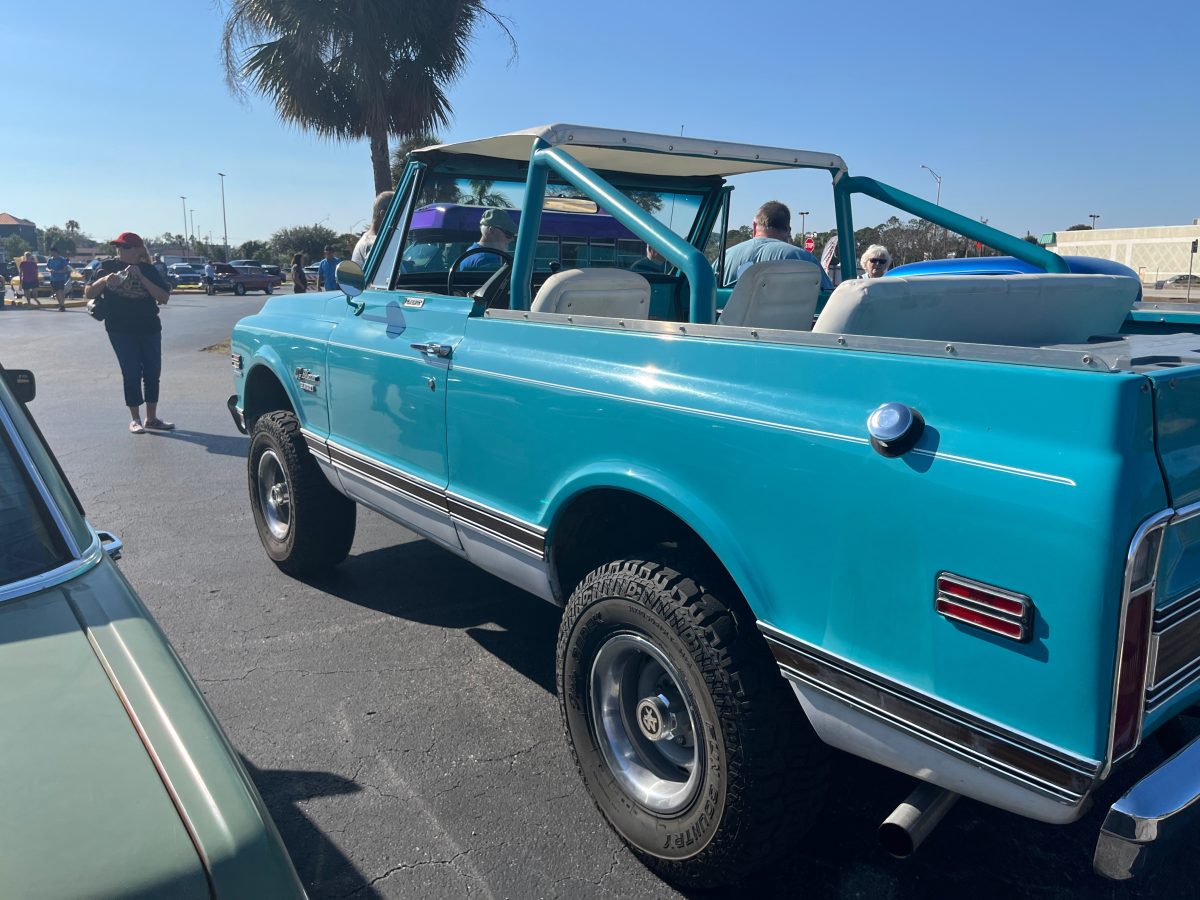
The first-gen Blazer was a short-wheelbase 2-wheel drive C10 four-wheel drive truck with an optional full-length, removable fiberglass roof. With a 104.0-inch wheelbase, it was 11.0 inches shorter than that of the smallest pickup, but it was wide and tall compared to competitors like the Ford Bronco and International Scout. It also had more get-up-and-go compared to its competition if the 350-cubic-inch (5.7-liter) version of the Small Block Chevy V8 was ordered. Rated at 255 horsepower and a monster 355-pound-feet of torque, the four-barrel carbureted 350 was 50 horsepower more than Ford’s 69 Bronco ordered with a 302 V-8. Four-wheel drive Blazers outsold the two-wheel drive versions by about 10 to one.
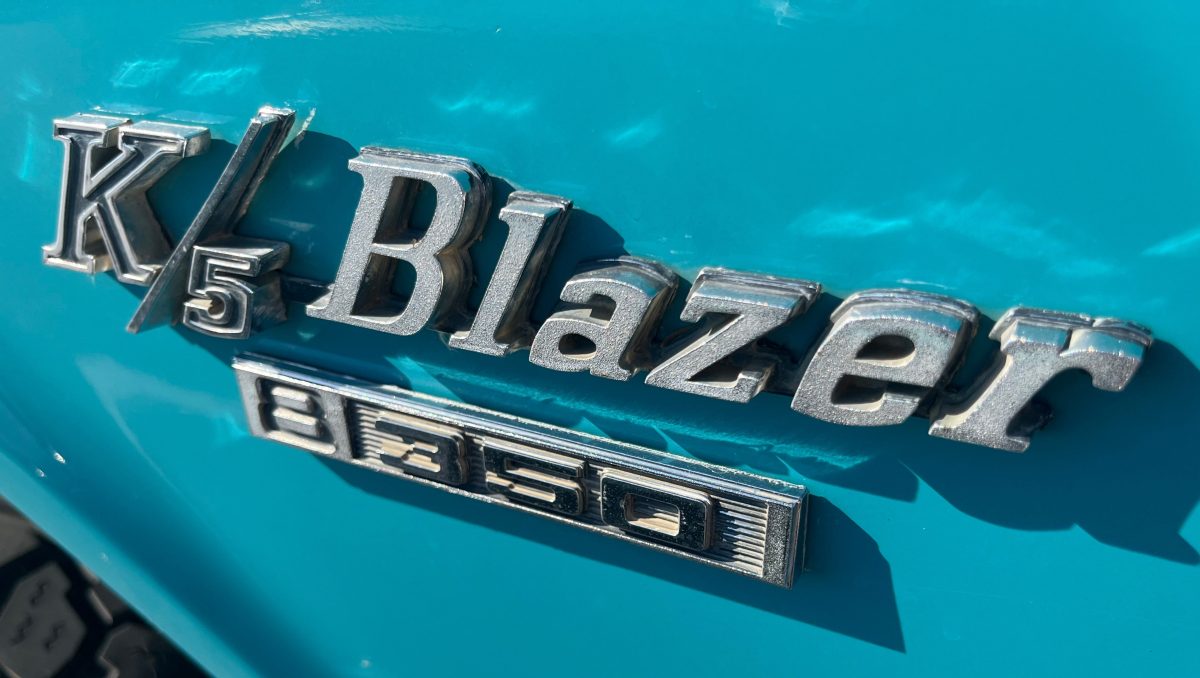
Both the Blazer and Jeep CJ used solid axles supported on leaf springs fore and aft. The Blazer was wide, meaning it could not meander along narrow paths like a Jeep CJ. But there was tons of room for all the stuff you wanted to pack for the day. And while the 104-inch wheelbase was short for a full-size truck, it dwarfed the Jeep CJ-5 by 23 inches, giving it a better ride.
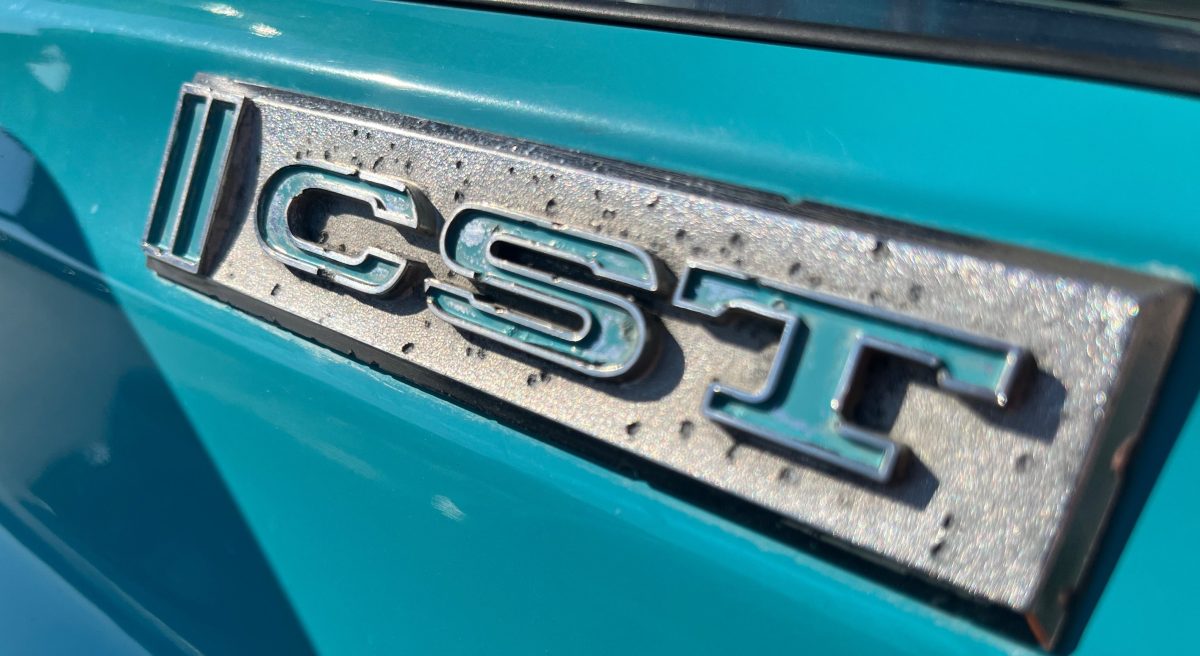
The Blazer introduction’s timing was spot on because it went on sale when the economy was booming, and Americans had more money in their pockets, with increased leisure time, and increasingly identifying themselves by how they spent their free time rather than with what they did for a living. Recreational vehicle sales were booming along with the rise of Baby Boomers. It was just a year later that American Motors caught wind of this and purchased Jeep. This was a generation that could afford to be self-defined by things other than what was done to survive.
RELATED Spot: A trailblazer for Ford.
Because of a strike at GM, Blazer sales were just 4,935 in the 1969 model year, but the next year, sales jumped to 11,527 and then 17,220 in ’71, more than doubled with 44,266 in 1972. Realizing this wasn’t just a fad, other manufacturers jumped in. Dodge introduced its Blazer-like Ramcharger for 1974, and the Bronco mutated into a full-size truck for 1978.
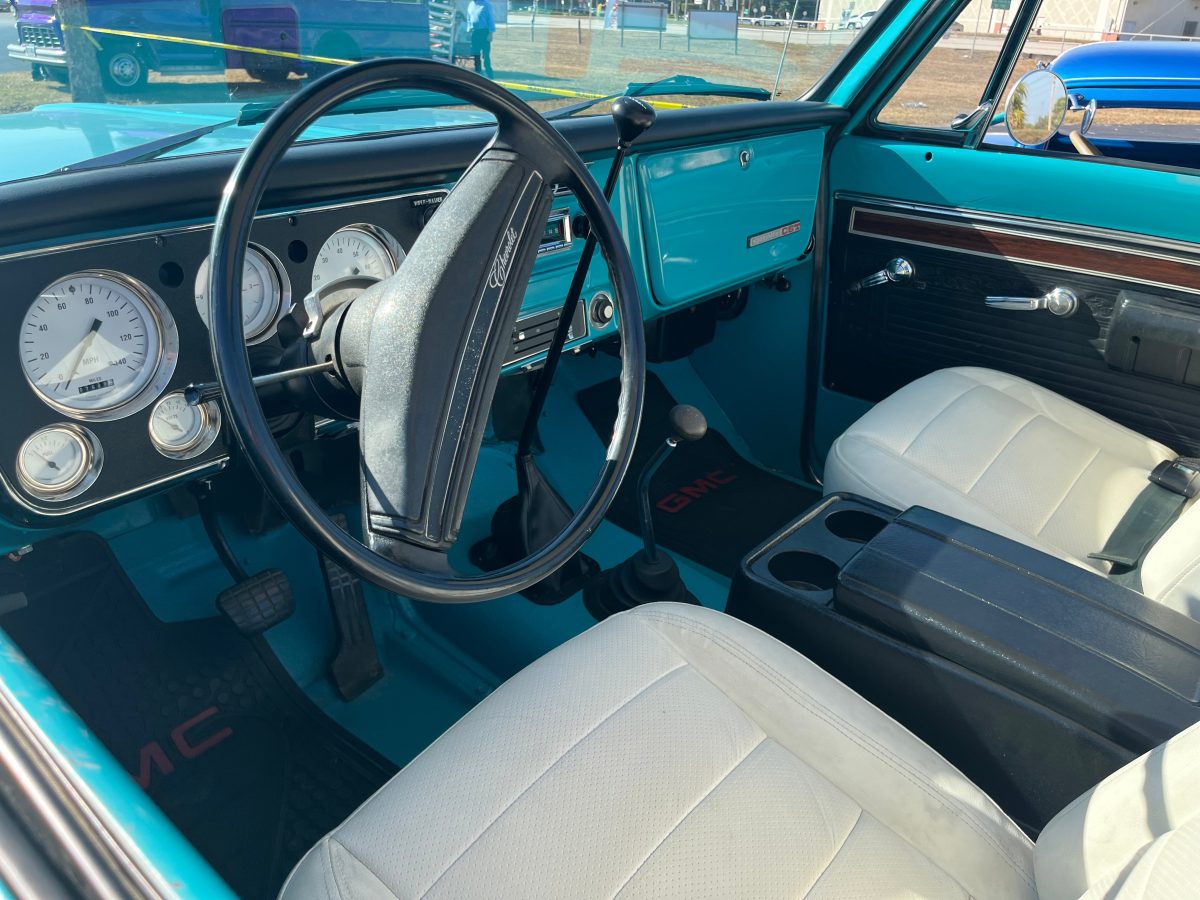
The Blazer would grow in future generations, but in 1995, the Blazer name died as even the two-door full-size SUV became a Tahoe. And the two-door models were discontinued altogether after the 2000 model year.
They are undergoing a sort of renaissance now with companies like Velocity Restorations and Roadster Shop rebuilding these trucks into restomods with modern LT1 V8 engines, 10-speed transmissions, and luxury interiors. Like the original Ford Bronco, prices for restored K-5s are crazy stupid, with some going for as high as $340,000.
Thanks for stopping by and checking out this week’s find. Come back next Sunday for another one of my spots, along with some of its history, and have a great week ahead.
 Savage On Wheels
Leave a comment