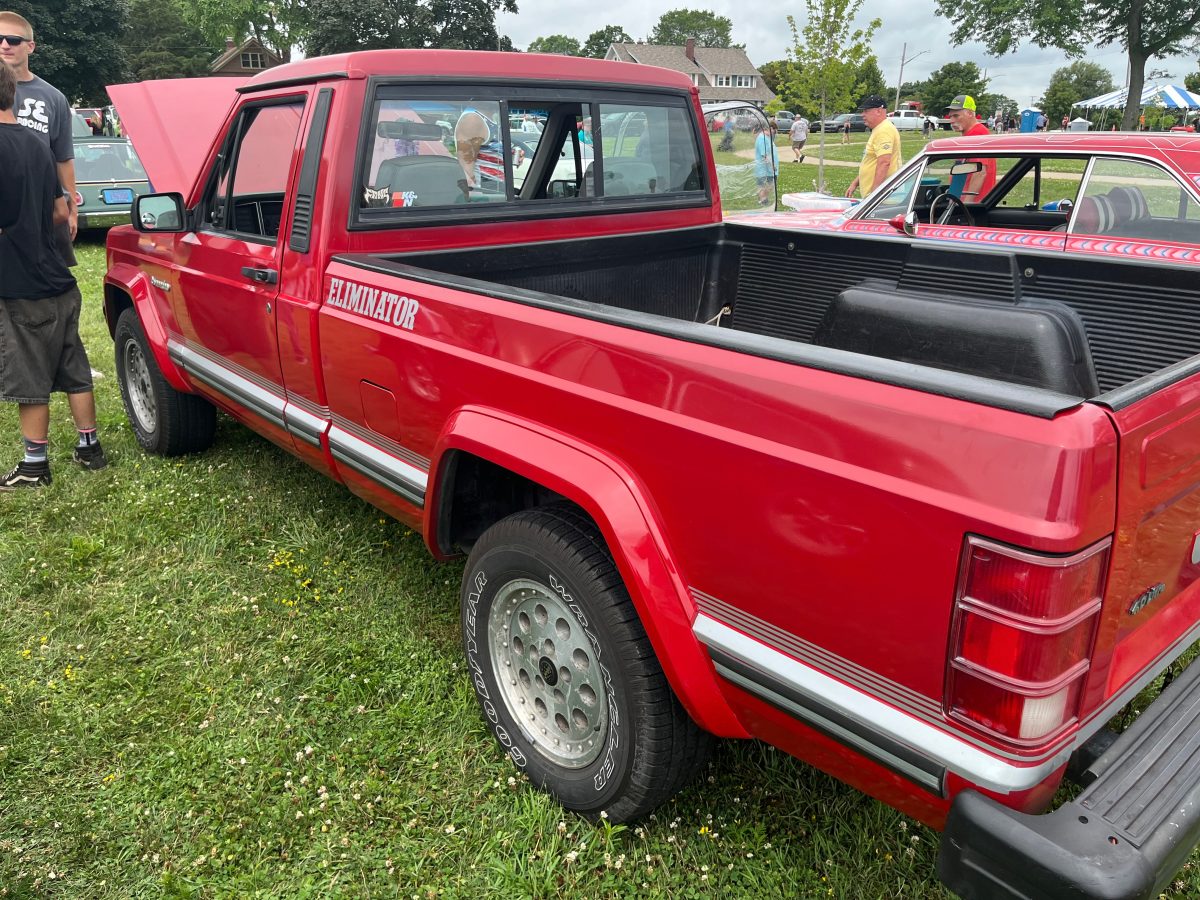
It might not have been first to the party, but it was the coolest
Well, that might just be my opinion because I’m a Jeep guy. Jeep had just revolutionized the SUV world by introducing the new XJ model in 1983 and it was an immediate hit. Developed when American Motors Corp. owned Jeep, they marketed XJs as Sportwagons, an SUV before that term was even used, and are credited for spawning competitors, as other automakers noticed the design cannibalizing sales from regular cars. The XJ was replacing the traditional role of the station wagon and transforming the vehicle type “from truck to limousine in the eyes of countless suburban owners.”
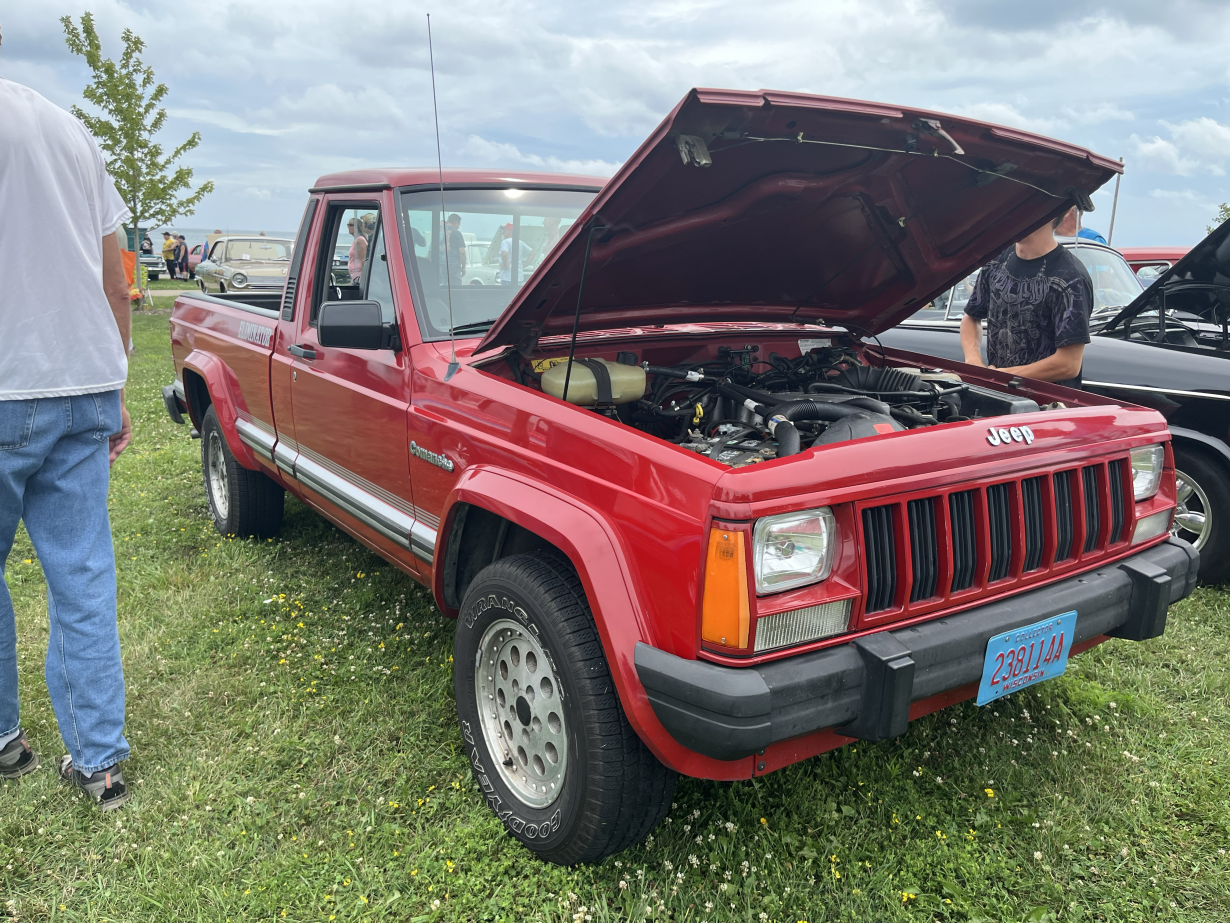
It was a great time to be a Jeep fan because, after AMC bought it in 1970, they revamped the entire line. In 1980, AMC got a shot in the arm from a partnership with Renault, which pushed the Jeep line into new territory, like this week’s spot, a 1992 Jeep Comanche Eliminator.
Following the success of the Cherokee XJ, Jeep tasked its engineers with turning the SUV into a truck. In 1986, Comanche was Jeep’s entry in the compact truck field, which at the time was a pretty crowded segment. That first year, it was offered only as a single long-wheelbase model in base and a couple of uplevel trims. It came with a four-banger, but with a 115 hp GM-built 2.8-liter V6 optional, and an 82 hp diesel four also available. But things got a big bump in 1987 when the new Jeep 4.0-liter straight-six replaced the GM V6 as the optional engine. Replacing a 115 hp engine with one that cranked 173 hp meant the performance was extraordinary. At the same time, Comanche added a short-wheelbase model.

Typical of AMC at the time was to go off and break some records. To show off its performance, in late 1986, a specially prepared 1987 Comanche, powered by a modified version of the 4.0-liter, set nine US and four international records at the Bonneville Salt Flats. The highlight was Comanche’s record average speed of 141.381 mph in a two-way run over the measured mile.
The top speed registered during the runs was 144.028 mph. Quarter-mile runs were clocked at 16.9 seconds, which was impressive for a six-cylinder pickup back then. Magazine reviews noted that too, and soon were including acceleration runs in their tests, often noting 0-60 mph times well under 10 seconds for a stock vehicle, by far the best performance of a compact truck. Not too bad for a rear-drive truck with an open bed.
RELATED Spot: A well-pampered Comanche.
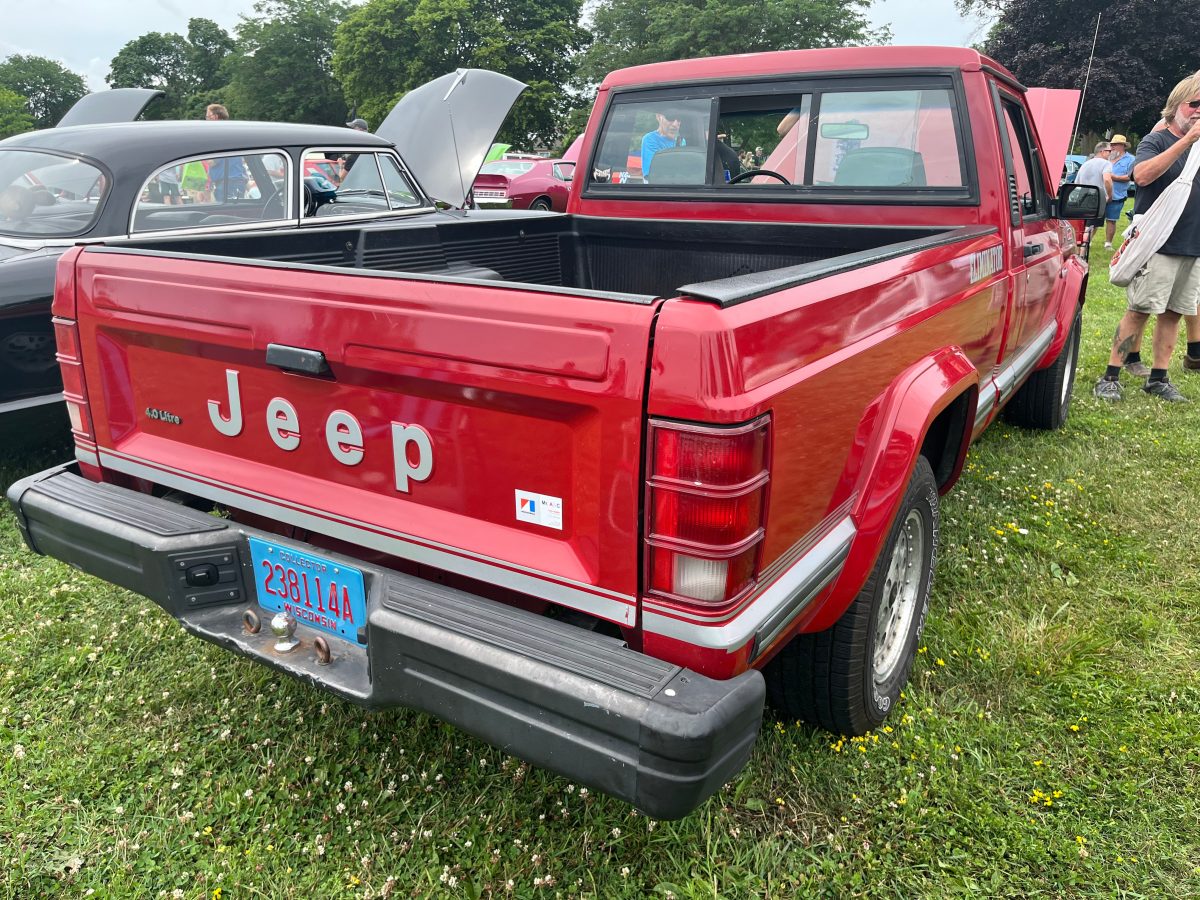
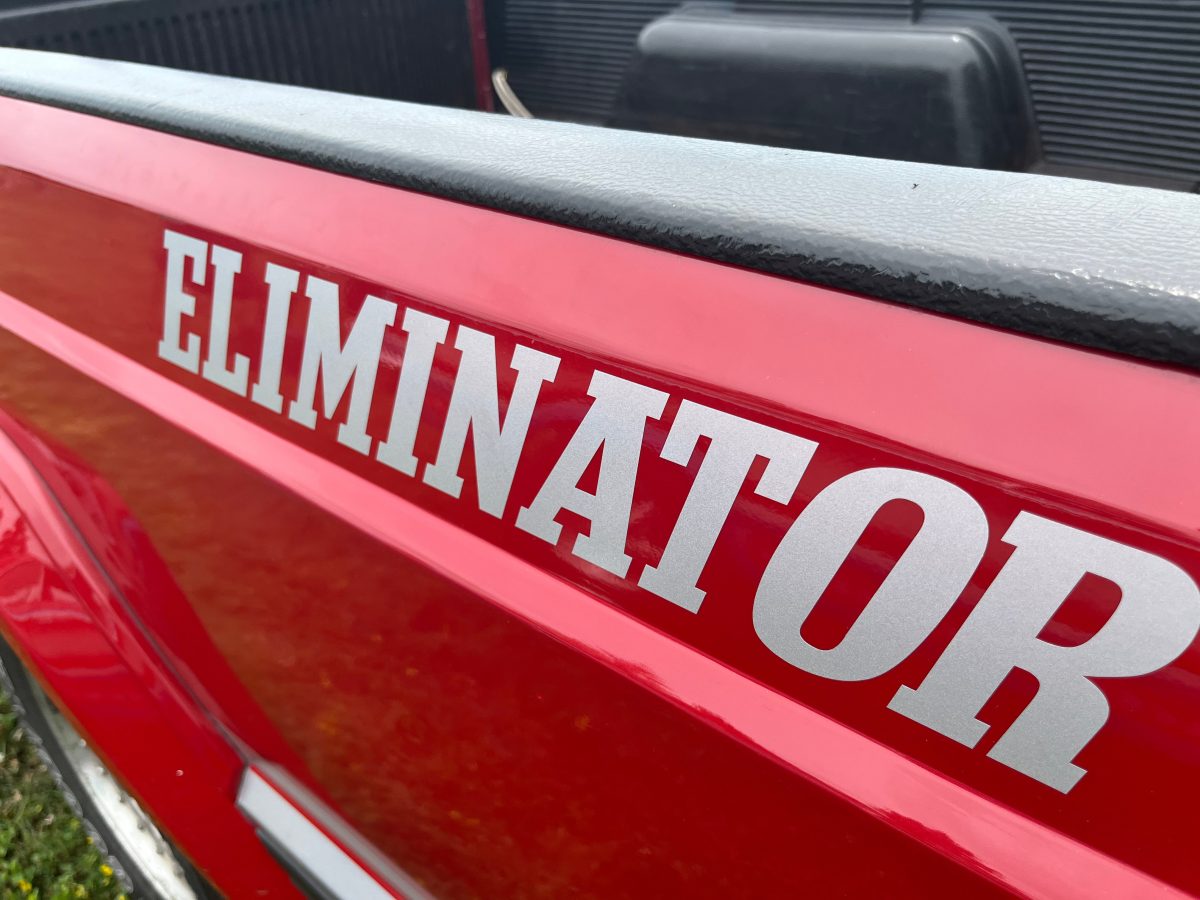
1988 is when the Eliminator package comes in. Built for enthusiasts looking for a sporty truck that was capable of outstanding performance.
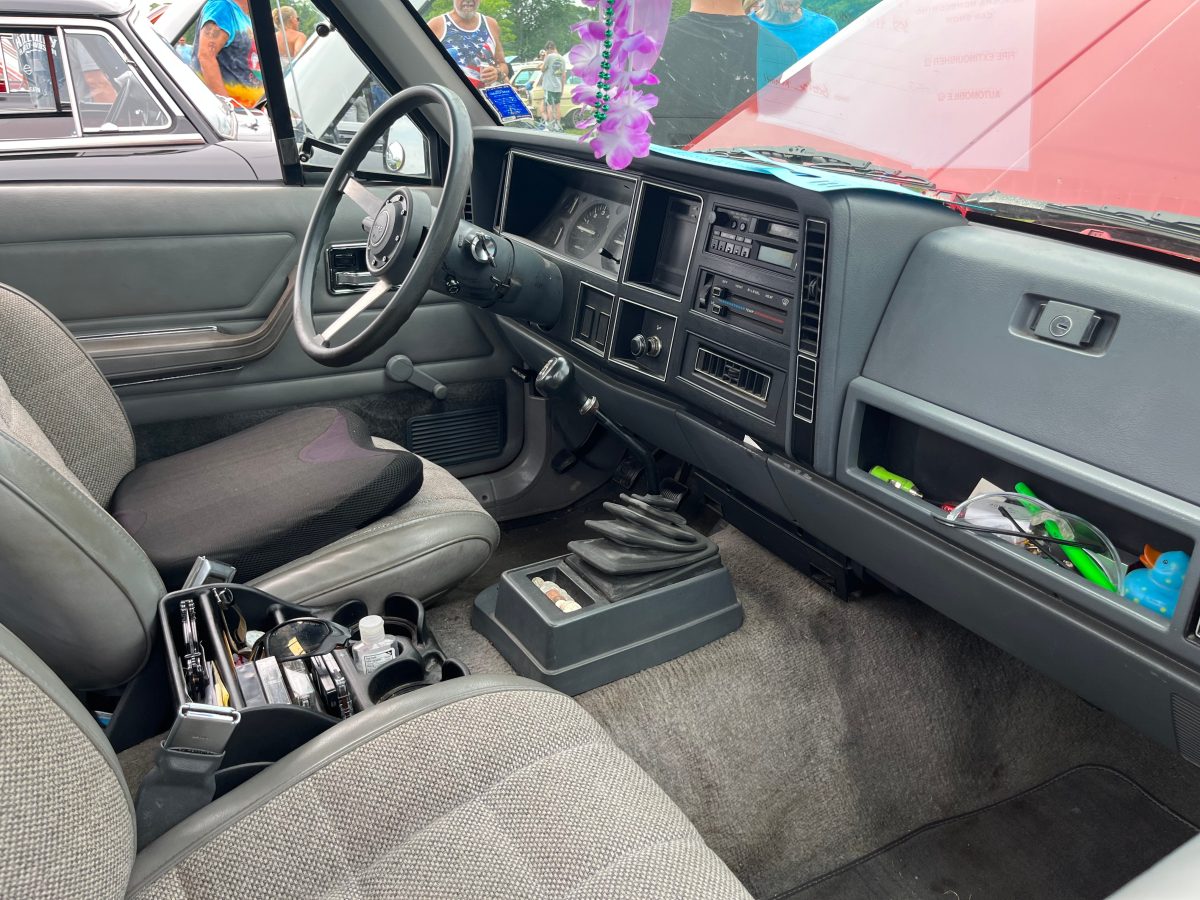
With a suggested retail price of $2,929, the 4.0-liter straight-six, rated at 177 hp and 224-lb.-ft. of torque, is included, along with a sturdy five-speed manual gearbox. Also included were P215/65R15 OWL “Eagle GT” radial tires mounted on 15 x 7-inch, 10-hole aluminum wheels with bright hub centers along with a tachometer, a gauge group, fog lamps, and power steering. A four-speed automatic transmission with console shift was optional.
There also were luxury items such as custom trim door panels with stowage bins and hockey-stick armrests, floor carpeting, fabric headliner and sun visors, wingback bucket seats, a three-spoke steering wheel, and a carpeted trim panel on the back of the cab.
Outside, a color-keyed grille, body-color fender flares and front air dam, side decals, and silver-painted bumpers front and rear were standard. Three exterior colors were offered: Classic Black, Colorado Red (as shown), and Dover Gray Metallic.
This wasn’t just a Jeep that could go fast. As a tow vehicle, the Comanche was best in class. The 4.0-six, manual transmission drivetrain combo was rated to pul trailers up to 2,000 pounds (Class I), while the 4.0 with automatic could be optioned up haul 5,000 pounds (Class III).
In 1991, Jeep boosted the 4.0-liter engine’s power to 190 hp and adopted the advertising slogan: “Absolute power erupts absolutely.” That year, the company also added a 4-wheel-drive Eliminator to the Jeep lineup. The last year for Jeep Eliminator was 1992 and its color choices expanded to include Midnight Blue, Hunter Green, Dark Cardovan, Gray Mist, along with Black, Colorado Red, and Bright White.
And then things got crazy.
In 1987, the assassination of Renault’s chairman, Georges Besse, who favored keeping AMC, forced a sale of Jeep to Chrysler. The company would then have Dodge competing with the Comanche with its own Dakota pickup, and Lee Iacocca would have none of that. So Commanche was dropped after 1992.
Approximately 200,000 Comanches ultimately came off the Toledo assembly line. These vehicles were remarkably built for their time, as many have lasted up to 300,000 miles, an incredible feat by today’s standards. If you can find one in decent shape, expect to pay around $10 grand for it. I like it a lot better than today’s Jeep Gladiator.
Thanks for stopping by and going on this trip down memory lane for me, as my dad was working at AMC during this time. Come back next Sunday for another one of my spots, along with some of its history. Have a great week ahead.
 Savage On Wheels
Leave a comment