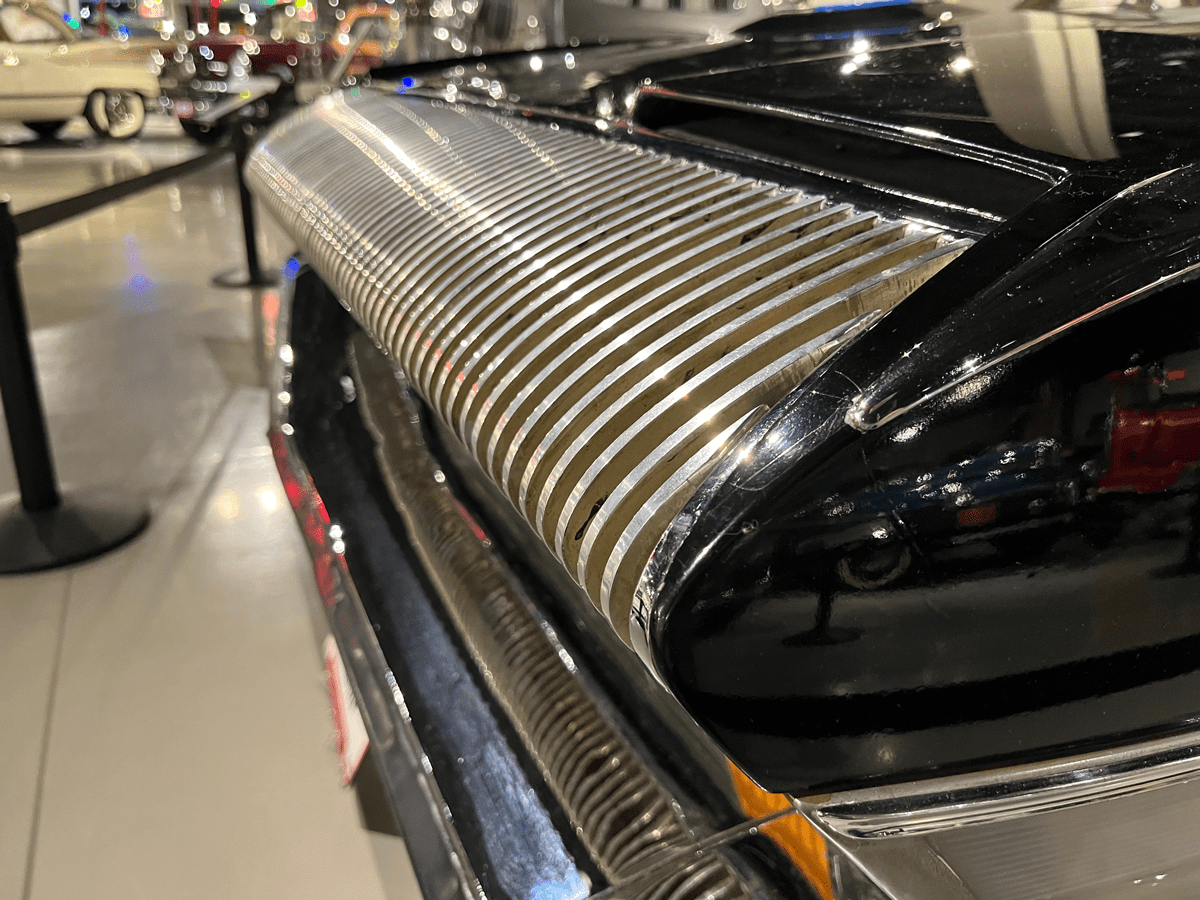
The futuristic concept you probably never knew existed …
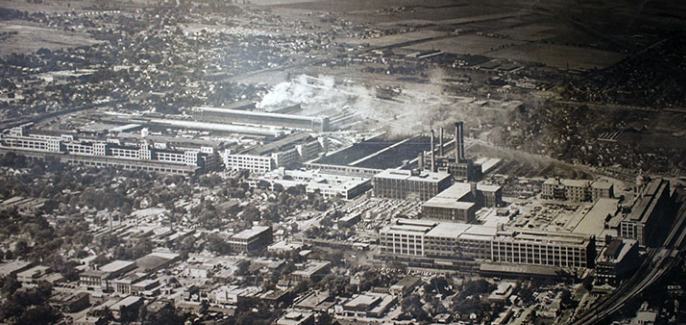
Being an AMC geek, I love the story of underdogs, which is also why I like Studebakers. Born in South Bend, Indiana in 1852 as a coachbuilder (think wagons of all sorts) like other companies at the time entered the automotive business in 1902. The 1920’s were booming years for the company. Its South Bend plant was huge, 225 acres, spread over three locations, with buildings occupying 7.5 million square feet of floor space. It cranked out 180,000 cars annually and had 23,000 employees. But like American Motors it seemed to zig when it should have zagged and was always scraping the bottom of the barrel when it came to funds for product development.
Fast forward to the ’60s and after a failed merger with Packard the company was swinging for the fences. Milwaukeean Brook Stevens came to the rescue with redesigns of the Hawk and Lark along with an all-new Avanti, but it wasn’t enough. Determined not to let the company go under he came up with this week’s stunning spot, the Sceptre. A futuristic two-door that looked nothing like any of the existing Studebaker nameplates, Stevens, a noted industrial designer, envisioned it as a grand touring coupe aimed at the Ford Thunderbird. With the exception of the Avanti, it made all other Studebakers appear dated.

In the early 1960s, with America caught up in the space race, designers took cues from rockets and planes and the Scepter is no exception. A razor-like insert was the defining feature up front stretching the entire width of the fascia and hiding a Sylvania tubular headlight. Previous Studebakers had emblems on the nose but since there was no place on the Sceptre, Stevens placed an oversized version at the hood’s center. That too was a new design, featuring a three-sided “polo mallet” carried through on the wheel covers and the steering wheel. The rear was just as spectacular with full-length lighting behind a translucent lens. Sort of reminds of Thunderbird styling.
RELATED Spot: Another cool car from Studebaker, the Golden Hawk.

The interior too took cues from the space age. Stevens kept things flamboyant with gauges covered in transparent bubbles and a slide-rule speedometer placed high above the dash. He also included a large glove box that slid back toward the front passenger like a tray table in today’s airliners. Overall, it would have been as luxurious as other premium cars at the time.

The prototype was built by Sibona-Bassano in Turin, Italy, and cost Stevens about $16,000, or $167,000 today. He took delivery of the concept in April 1963 and immediately presented it to Studebaker but while the company’s President Sherwood Egbert liked the idea, the project was never greenlighted, and Studebaker disappeared by 1967.

This car is another example of a “what if? In 1954, George Mason, the president of Nash, was working on a proposed merger with Hudson, Packard, and possibly Studebaker. The Packard president wanted to run the show, Mason said no, the merger was just between Nash and Hudson making it the largest corporate merger in US history at the time. Left without a partner at the dance, Studebaker eventually merged with Packard and we know what happened after that.
Thanks for stopping by and checking out this week’s spot. Be sure to check back next Friday for another one of my spots along with some of its history. Have a great weekend.
 Savage On Wheels
way ahead of it’s time, but interesting.
LikeLiked by 1 person