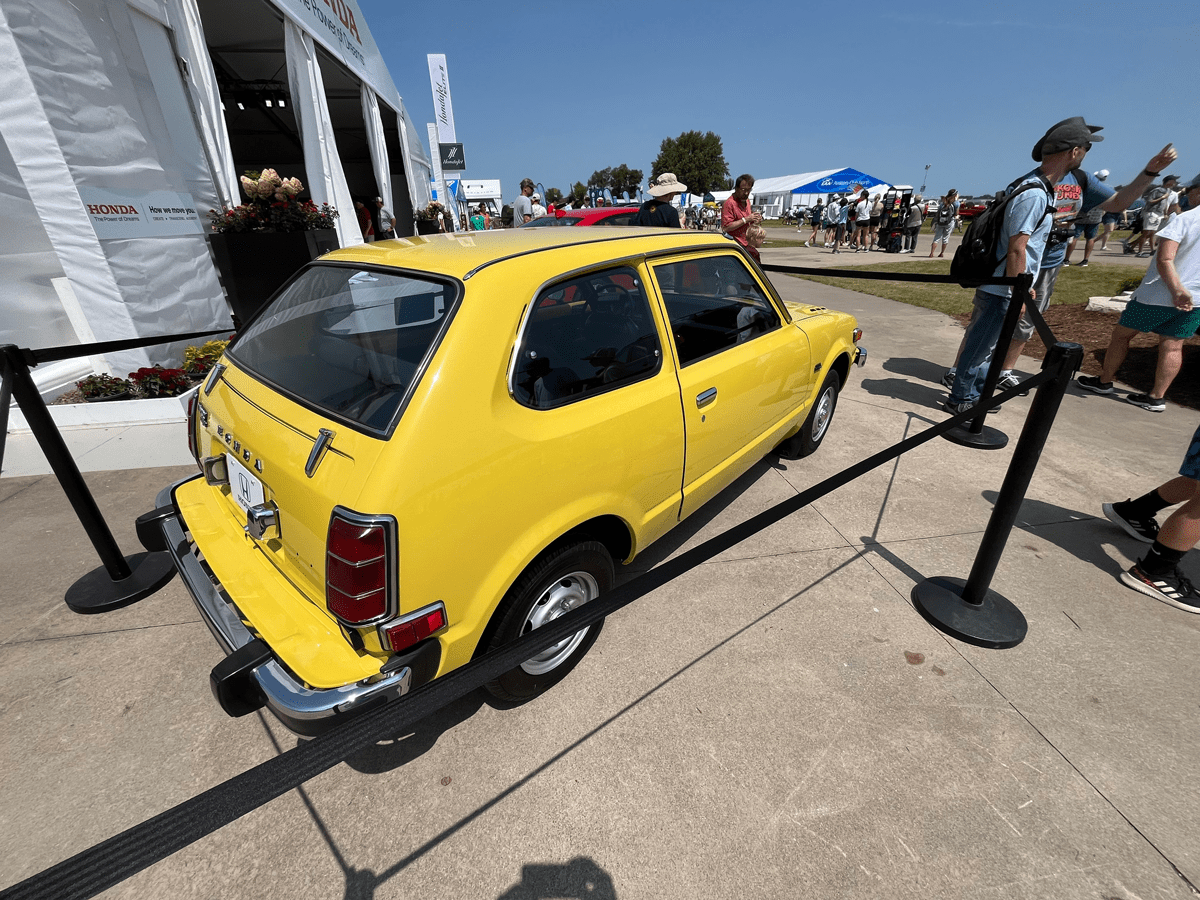
Honda was way ahead of the game when it came to US emissions
Still going through EAA AirVenture withdrawal. I was up at this year’s annual airplane gathering, the 71st edition of the event is July 22-28 at Wittman Regional Airport in Oshkosh, Wisconsin. One of the big sponsors, and a supporter of WomenVenture (which our daughter Meg has been a part of to the last four years) is Honda. Ah, and you thought they only made cars. Yup, Honda is into aviation and brought several of its HA-420 HondaJets to show off at the event.

But back to cars. In the early to mid-70s carmakers had a problem with tailpipe emissions. Enter the Clean Air Act and it hit the automakers hard with regulations. Sound familiar. Federal law mandated that unleaded fuel would be available at all gas stations on July 1, 1974, meaning that cars would have to be equipped with catalytic converters allowing the 90 percent reduction in emissions the EPA regulated. People freaked, carmakers scrambled because the cleaner, more fuel-efficient future seemed scary.
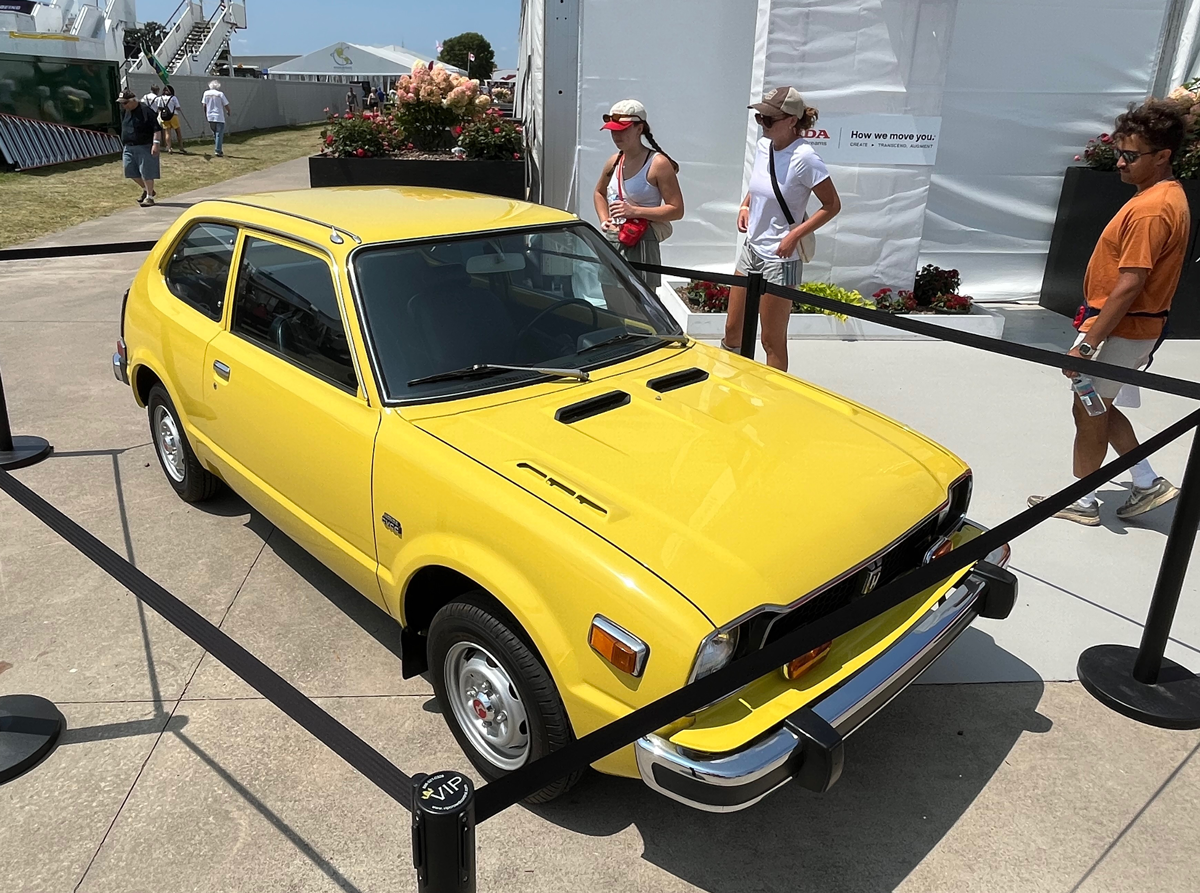
All except for Honda which started working on this problem back in 1966. Honda engineers determined catalytic converters to be too fragile and didn’t scrub as many pollutants as the three-way type we use now. Honda also looked at alternatives to regular four-stroke, gasoline-powered engines, but, in the end, decided to stick with good old internal combustion. They’d just clean it up a bit with combustion-chamber technology. Honda did such a good job that its Compound Vortex Controlled Combustion engine (CVCC for short) was the first to meet the U.S. 1975 emissions standards in December 1972. The engine needed no catalytic converter, and it could burn either leaded or unleaded fuel. It’s 1.5-liter inline-four engine produced just 53 hp but could get between 40-50 mpg making it an instant hit in sales. Its one of the first mass-produced vehicles to prioritize fuel efficiency and emissions control and Motor Trend’s Car of the Year in 1974.
RELATED Spot: A car that competed with the Civic, the Ford Pinto.
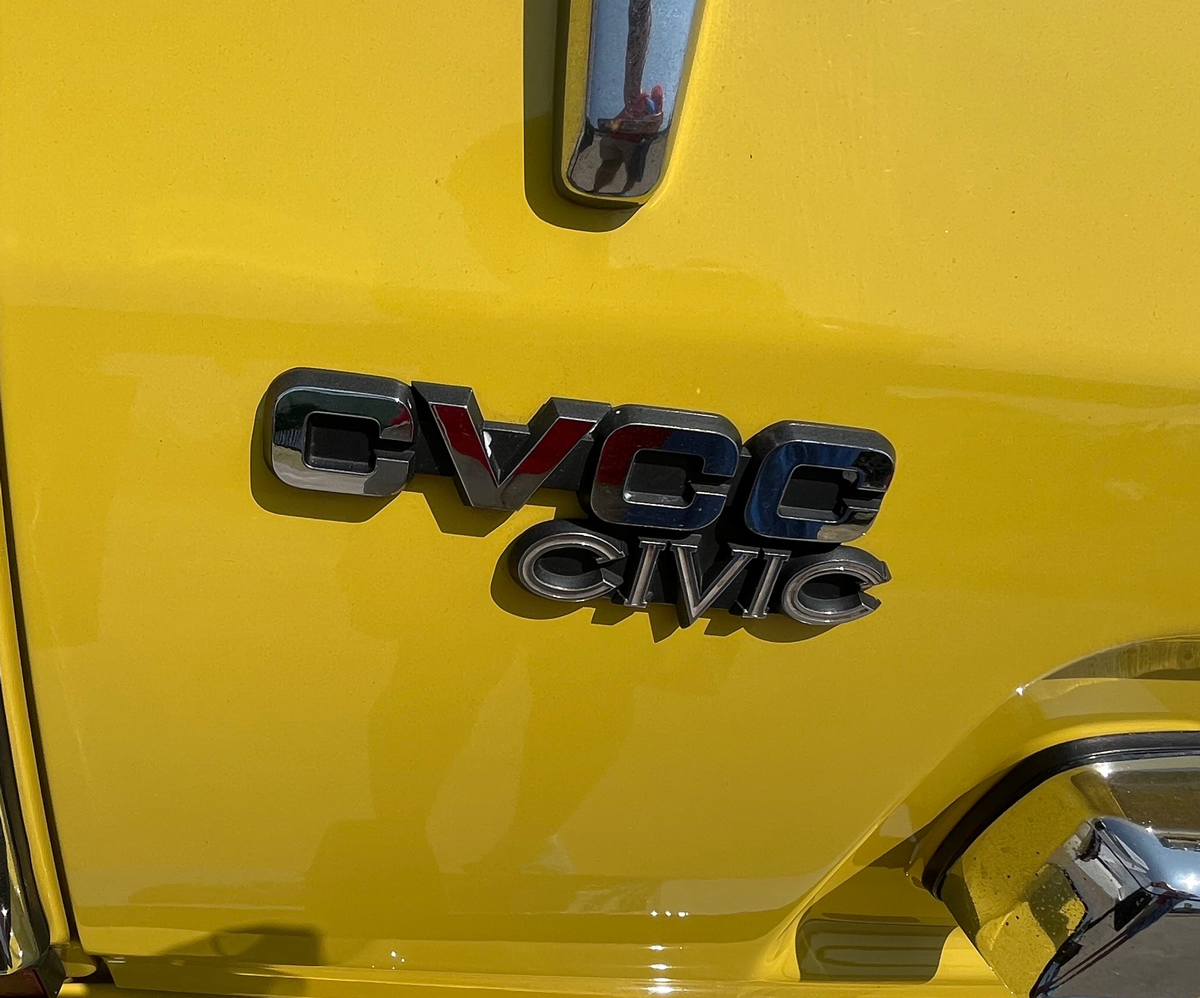
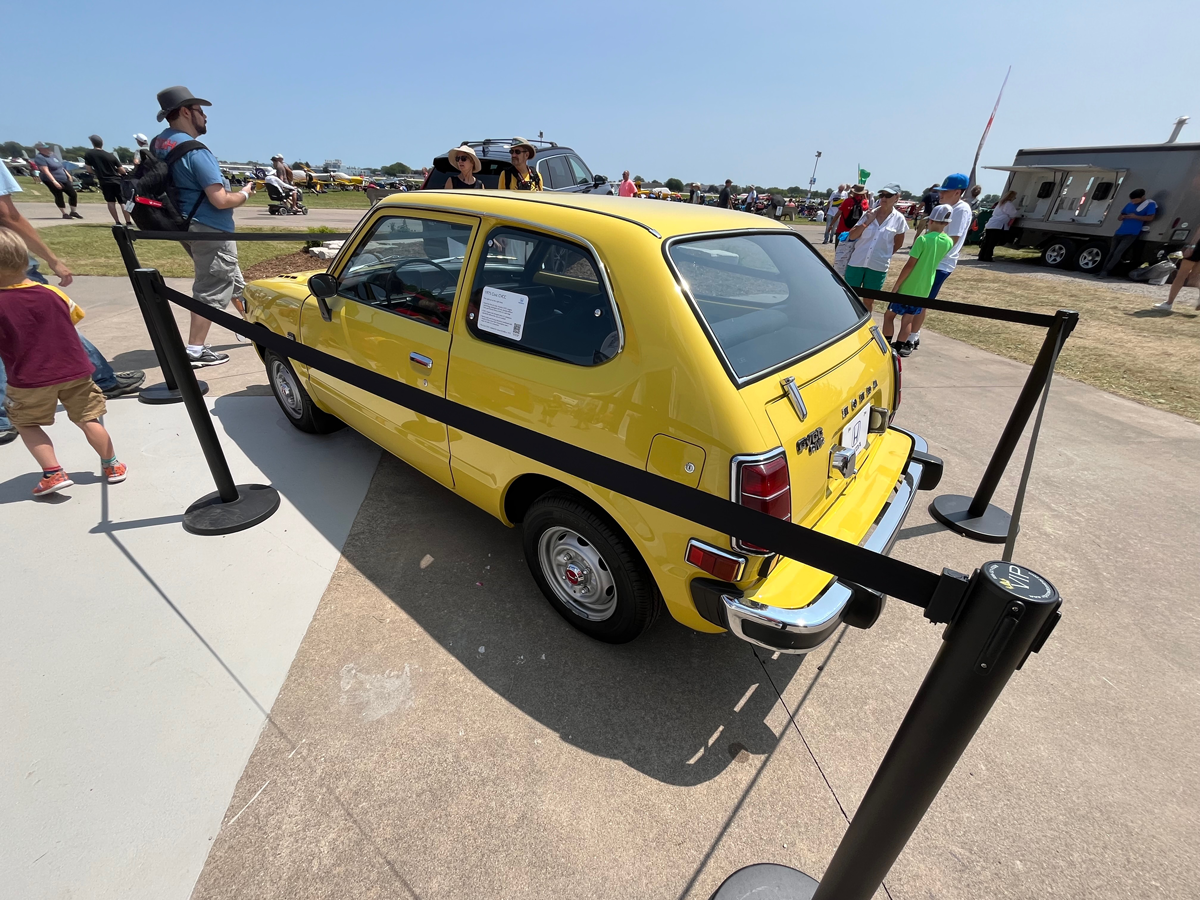
You can still find fairly clean examples for sale for under 3 grand but making sure they come from a salt-free warm climate is a must since they did not do well in the upper midwest because of the snow. Is it a collectable car? Well, that’s up to the buyer to decide. It was ahead of the curve and beyond its environmental significance, the Civic CVCC played a crucial role in establishing Honda as a major player in the American automotive market.

Thanks for stopping by and checking out my spot. The last, I promise from this year’s AirVenture. Check back next week for another spot along with some of its history and have a great weekend.
 Savage On Wheels
Leave a comment