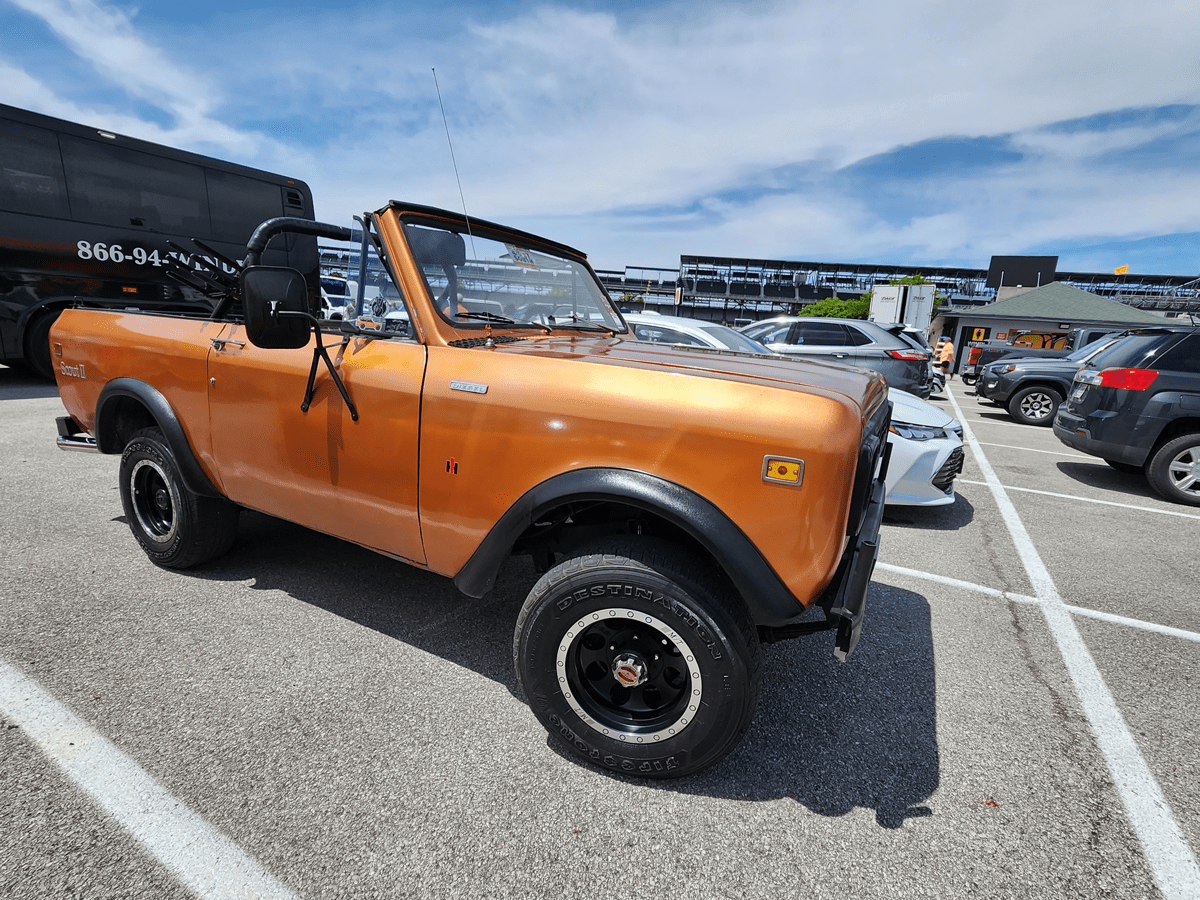
When you think about iconic off-roaders, Scout was a big one …
Jeep pretty much had the SUV market, which it wasn’t even called back in the ’60s. Introduced in 1962, The Jeep® Wagoneer, designed by Brooks Stevens and advertised as “All-New, All-Jeep” was an instant hit. It featured the first automatic transmission and independent suspension in a 4×4 vehicle. A new “Dauntless” V6 engine was available in the CJ-5 and Cj-6 doubling the power of previous engines.
Chevy had its Suburban that arrived as part of Chevrolet’s reimagined light-truck lineup in 1960 while the first-gen Ford Bronco didn’t come along until 1966. But there was another player in the space, this week’s spot, an early ’70’s International Harvester Scout II.

Created mainly to compete with the Jeep CJ, the Scout first entered production in 1960 with the Scout 80 and it initially featured a fold-down windshield. It was available with either 196 4-cylinder, 232 6-cylinder, 258 6-cylinder, 304 V8, and 345 V8 engines sourced from American Motors and also found in Jeeps at the time. The concept almost died as the higher-ups at IH never took to early designs that mimicked the Jeep. It was a concept that almost died as the higher-ups at IH never took to early designs that mimicked the Jeep.

Originally designed to be made of plastic but because of cost overruns was made from steel. The design was fast-tracked with a total development time of 24 months which was amazing considering the concept was unique and no in-house engine or manufacturing was available or even considered when the program started. Print slogans and marketing jingles during the 1970s signaled its appeal in the words, “International Scout: Anything less is just a car.” Priced at just over 2 grand and initially offered as a short-bed pickup truck, or with a hardtop, the Scout 80 was a hit because it was incredibly affordable for the average buyer and it coincided with America’s desire to get out into the great outdoors at the time.
RELATED Spot: The Jeep Scrambler
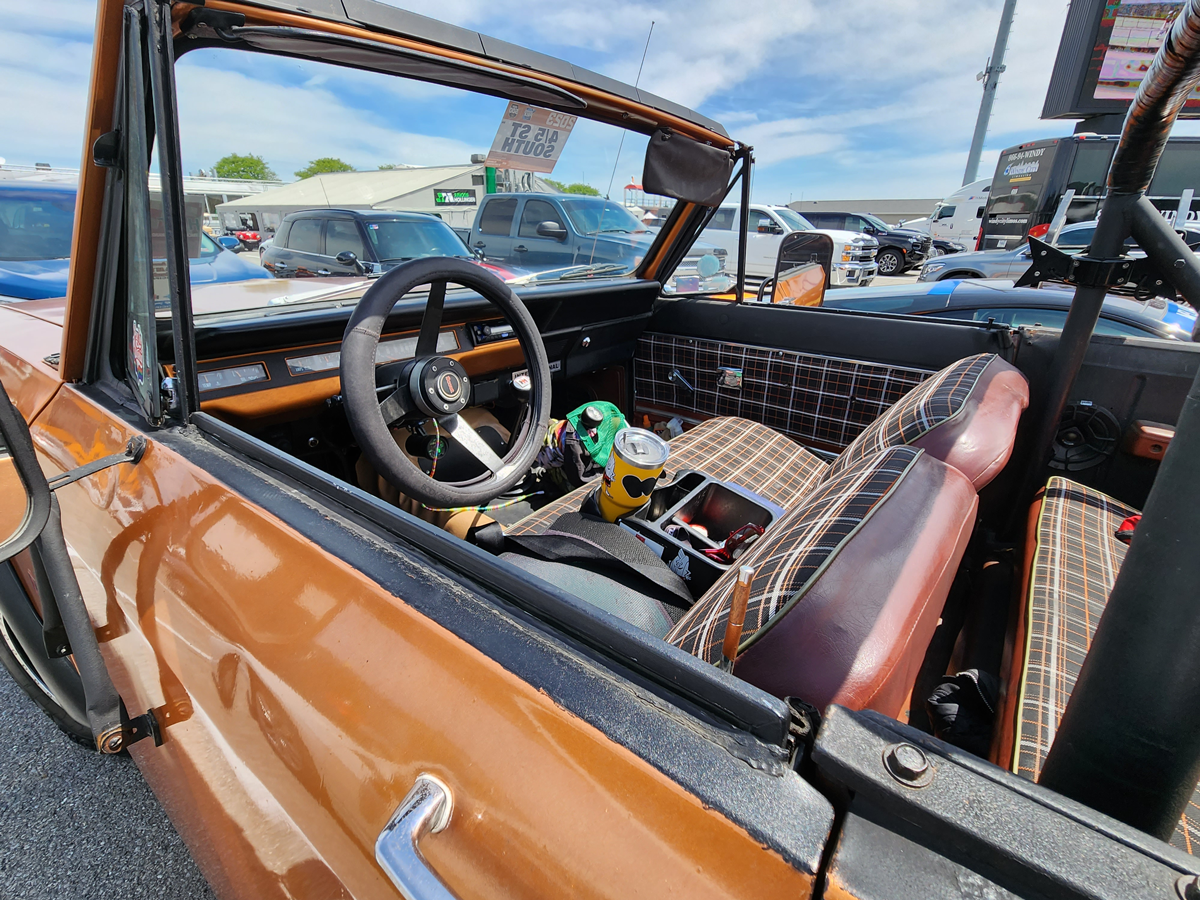
A concept for its replacement began in 1964 and was approved for production in mid-1965. The Scout II was introduced in 1971. But there was more competition now from the Chevy Blazer, Dodge Ramcharger, and even the Toyota Land Cruiser. Its basic sheet metal remained unchanged until production stopped on October 21, 1980. 532,674 Scouts were produced at the Fort Wayne, IN plant during its 20-year run. Like the Jeeps of the era, it set the stage for future four-wheel drive recreational vehicles we see as commonplace now.
RELATED Spot: The AMC Eagle

Why did it die? Well, it was all about money. In 1979, the UAW went on strike against International Harvester, and rather than adhering to the UAW’s demands, IH said no and the strike went on for 172 days costing the company $257.2 million ($1,121,946,083 today) in the second quarter of 1979, and a total of $479.4 million overall ($2,091,216,766 today! That’s BILLIONS!). Due to a lack of product and bad optics, Sales slid nearly 50% and by the time it was all over, there was no money to redesign the Scout II was done. Thanks to billions in debt, and terrible management, International Harvester sold off its assets in 1985 and reformed as Navistar in 1986.

What are they worth now? Depending on the Scout II model, the lowest is $6,100, while the highest is $95,000. The most expensive one sold in the last two years was a 1973 International Harvester Scout II that was priced and sold for $127,500 on July 9th, 2021.
Thanks for stopping by and checking out this spot. I have lots of others on our site so go ahead an paruse. Come back next Friday for another one of my spots along with some of its history. Have a great weekend.
 Savage On Wheels