Friends often ask me what I like better, cars or planes? See, I love them both, and it just comes down to what I’m doing at the time. Take, for example, about a week ago when I was up at Road America with Mark driving the brand-new Ford Mustang Dark Horse SC; then it would be cars. Then there’s the week of AirVenture, and then it’s solid airplanes! But what if someone could combine both?
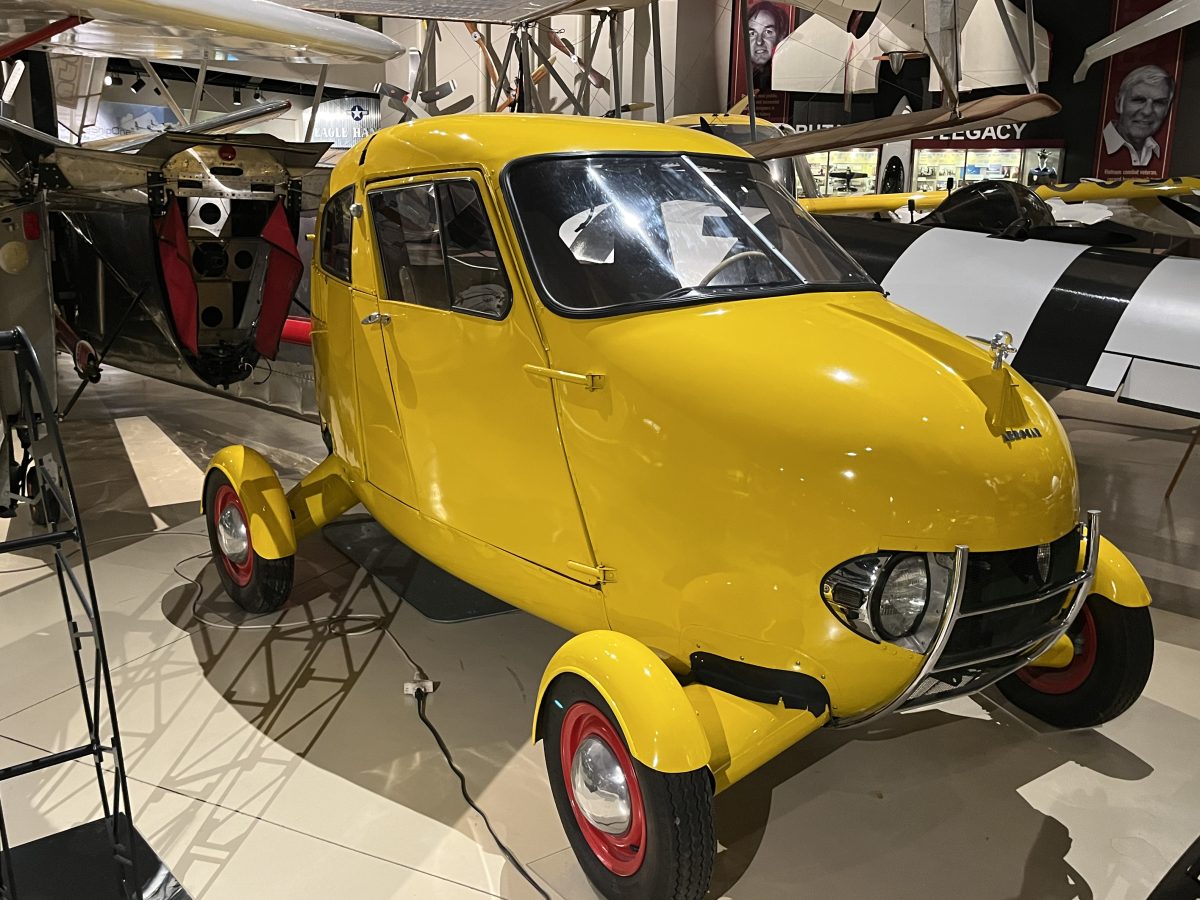
Let’s take a trip back to 1946 to talk about this week’s find that combines both my loves at one time, the 1949 Taylor Aerocar. The idea for the Aerocar occurred to its designer, Moulton (Molt) Taylor, during a trip to Delaware, when he met inventor Robert E. Fulton Jr. He became captivated by the concept of his roadable airplane, the Airphibian, but thought he could make a good idea even better. Molt immediately saw the weakness in the fixed, detachable wings of Fulton’s design, and set about building his prototype Aerocar with folding wings. That same year the Aerocar was born. Molt promoted the Aerocar at aircraft and auto shows and on TV and started receiving tons of questions about his design. He had buyers and raised money to certify the machine as an airplane, and build four “pre-production” Aerocars for demonstrations and eventual sale.
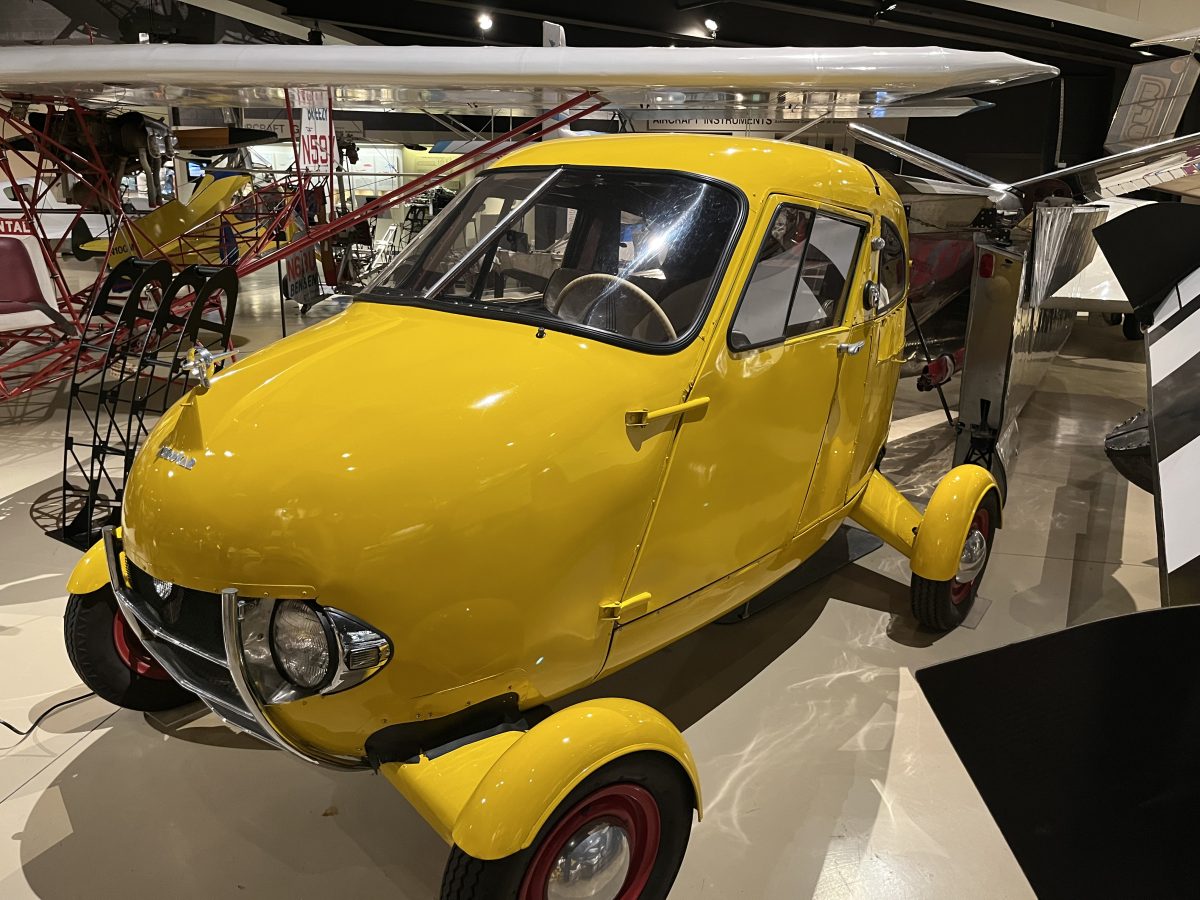
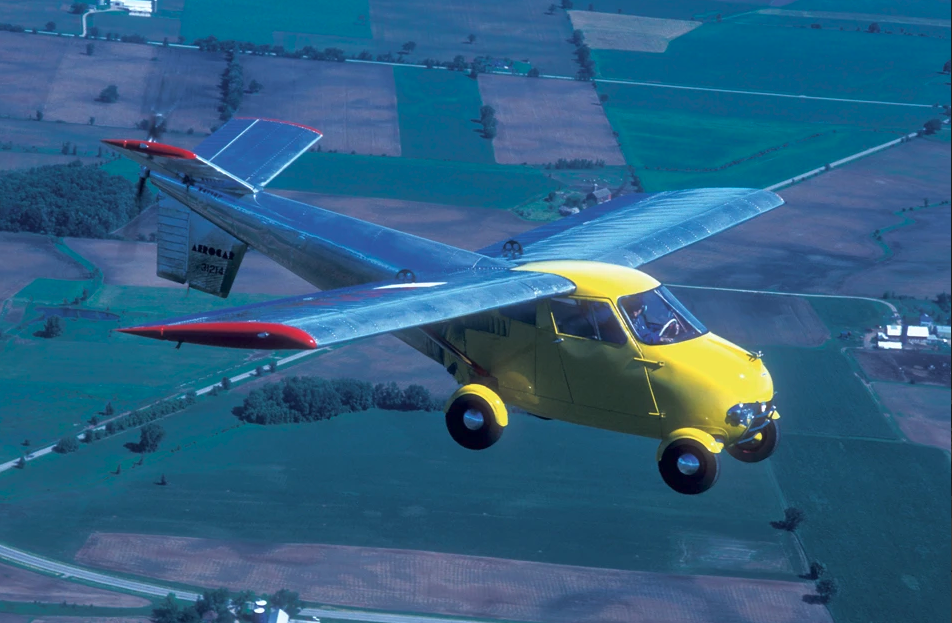
The Aerocar is a two-place aircraft with side-by-side seating, four wheels, high, unobtrusive wings, and a single Lycoming 0-320 engine mounted over the rear wheels. The propeller is mounted at the end of a long tail cone, and the latter is angled up considerably to provide adequate propeller clearance. Its cruise speed was 100 mph, and it initially sold for $25,000.
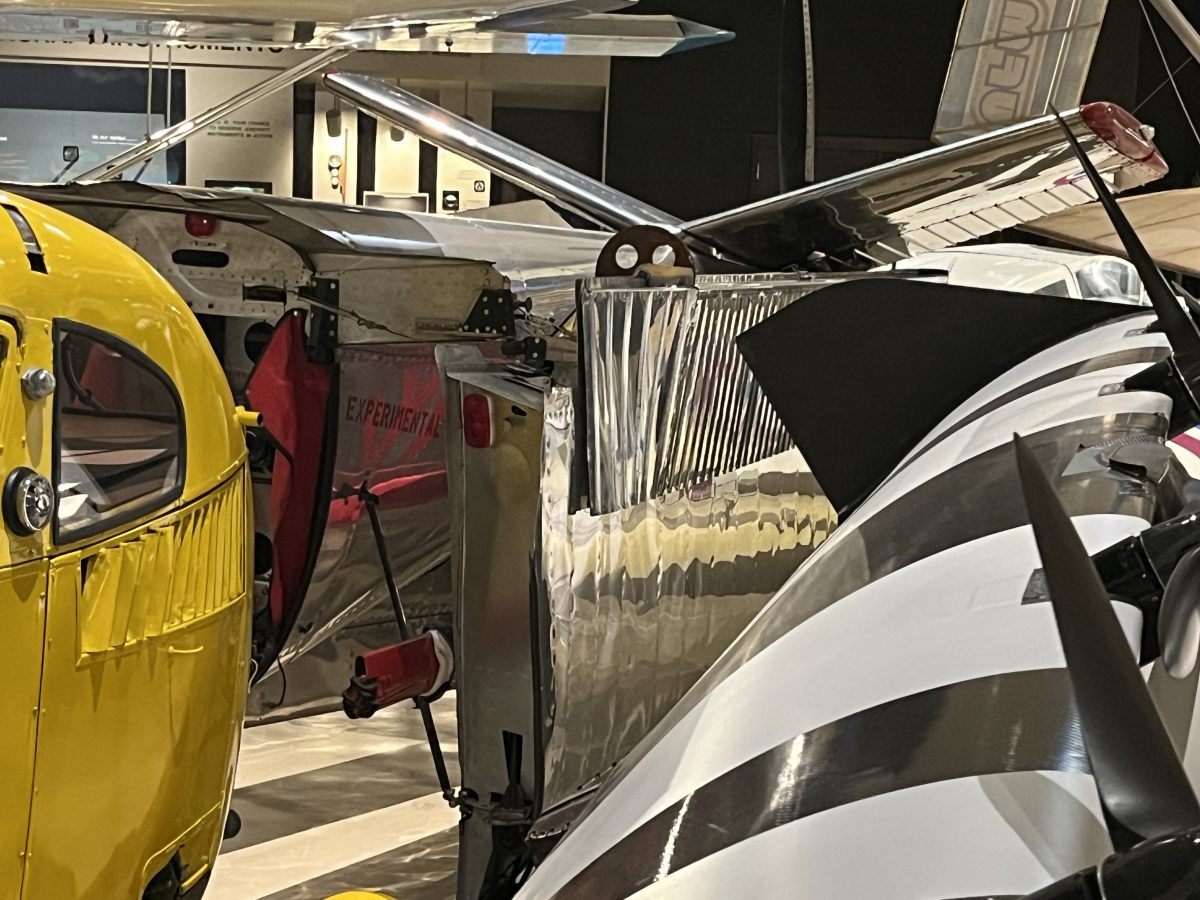
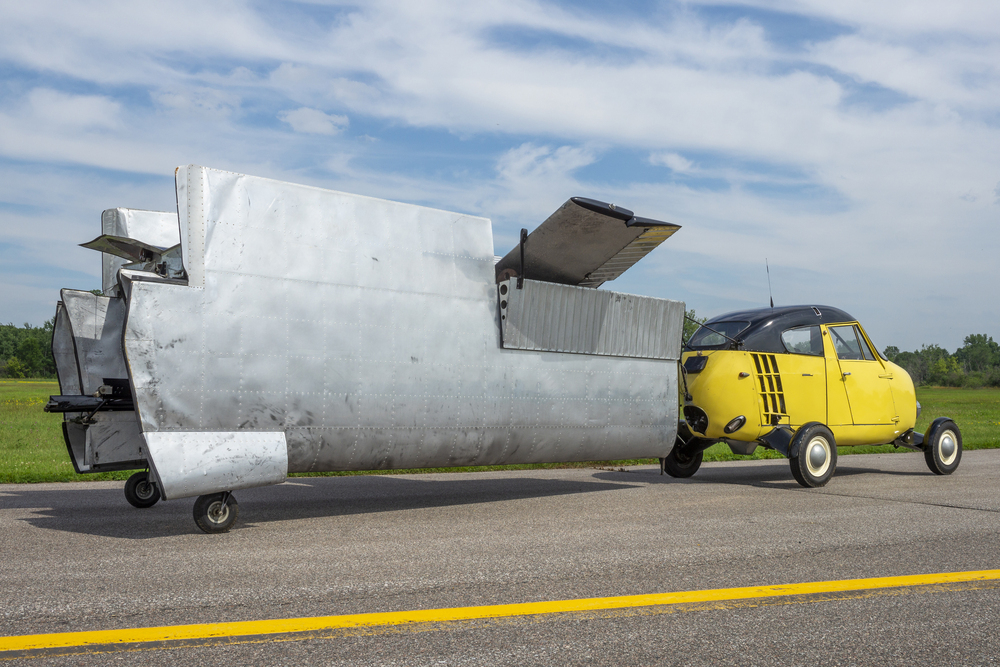
The one on display in the EAA Museum in Oshosh is a rebuilt prototype of the revolutionary concept. Not only can it be readily converted from an airplane to a roadable car, but its wings can also be folded back along the sides of the detached fuselage and towed behind the automobile like a trailer. Thus, it is not necessary to leave its wings, tail, and propeller at an airport for it to be driven on the highway, and one does not have to return to the same airport in order to fly again.
RELATED find: A close relative of the Aerocar.
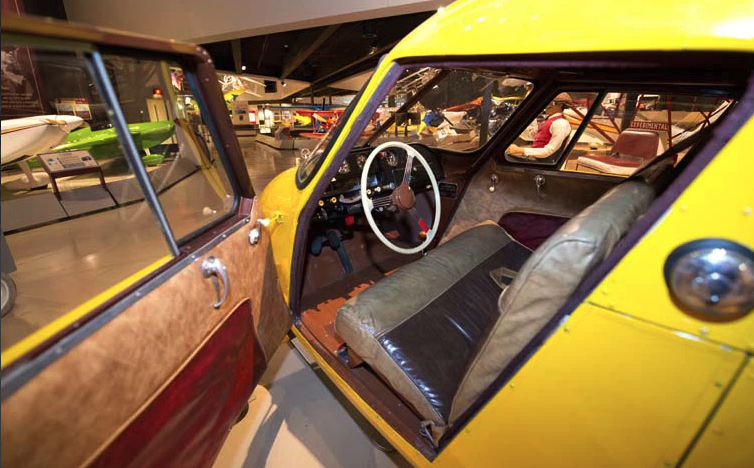
Its interior looks like a typical 1949, with a conventional steering wheel and gearshift stick from the floor. There is a toggle switch for the turn signal lights and a horn button on the steering wheel. The throttle is a large knob that protrudes from the middle of the dashboard. The auto instruments are on the left side, while the aircraft instruments are round gauges across the upper part of the dashboard.
RELATED find: This car only flew in the movies.
Sorry for the pun, but the Aerocar never really took off. It never entered mass production, with only six units built between its first flight in 1949 and its final iterations around 1968, so if you’re looking for one, be prepared to cash in your life savings. Value depends heavily on whether the aircraft/car is actively FAA-certified Airworthy. Examples are only found in museums like this one or in private hands. They typically sell from $275,000 at no-reserve auction and over $1 million–$2 million+ in private sales.
There are a few manufacturers making flying cars today, although they are expensive, niche vehicles rather than everyday commuters, and they face heavy legal and engineering limits, though a few prototypes have received special approvals. I did a story on one of them, the Switchblade, when it appeared at EAA a couple of years ago. It’s a hybrid-electric sports car that drives to an airport, unfolds its wings in under three minutes, and flies up to 450–500 miles. Its pricing begins at $200,000 USD for the base VFR (Visual Flight Rules) kit and $235,000 if you want to fly IFR (Instrument Flight Rules). One of the ways the manufacturer was able to offer it at this price is because when you buy one, you build it. Now that would be fun.

Thanks for stopping by and checking out this week’s spot. I’ll have another find along with its history. Have a great week ahead, and make sure to Like, Comment, Share this article.


Leave a Reply