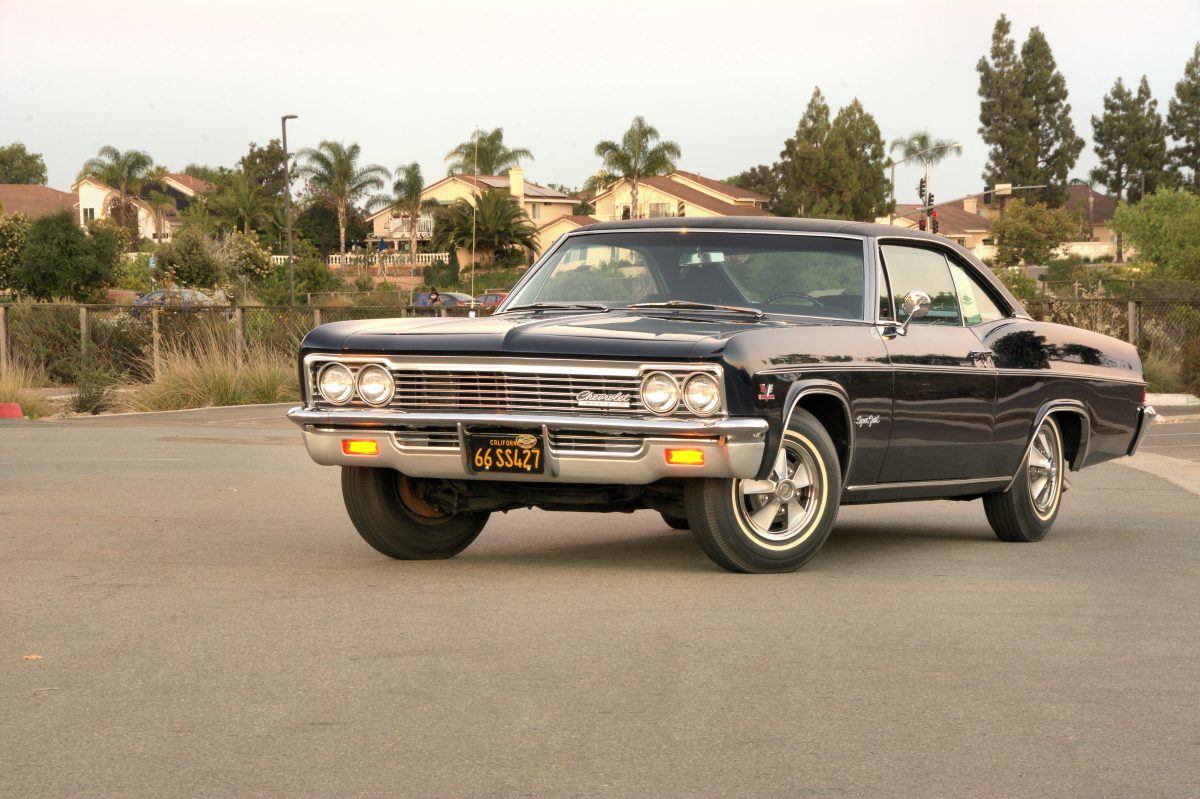
While I grew up in the 60s, I wasn’t old enough to drive or own a car. That didn’t stop me from drooling all over ones that had tons of horsepower and were quite capable not only of accelerating fast but also burning rubber. 60s muscle cars are as much a part of the country’s fabric as baseball and apple pie. The notion of a “muscle” car, one with an above-average ability to accelerate, came about not because America’s youth demanded it, but because conditions were just right. This week’s spot, a 66 Chevrolet Impala SS, is a great example.
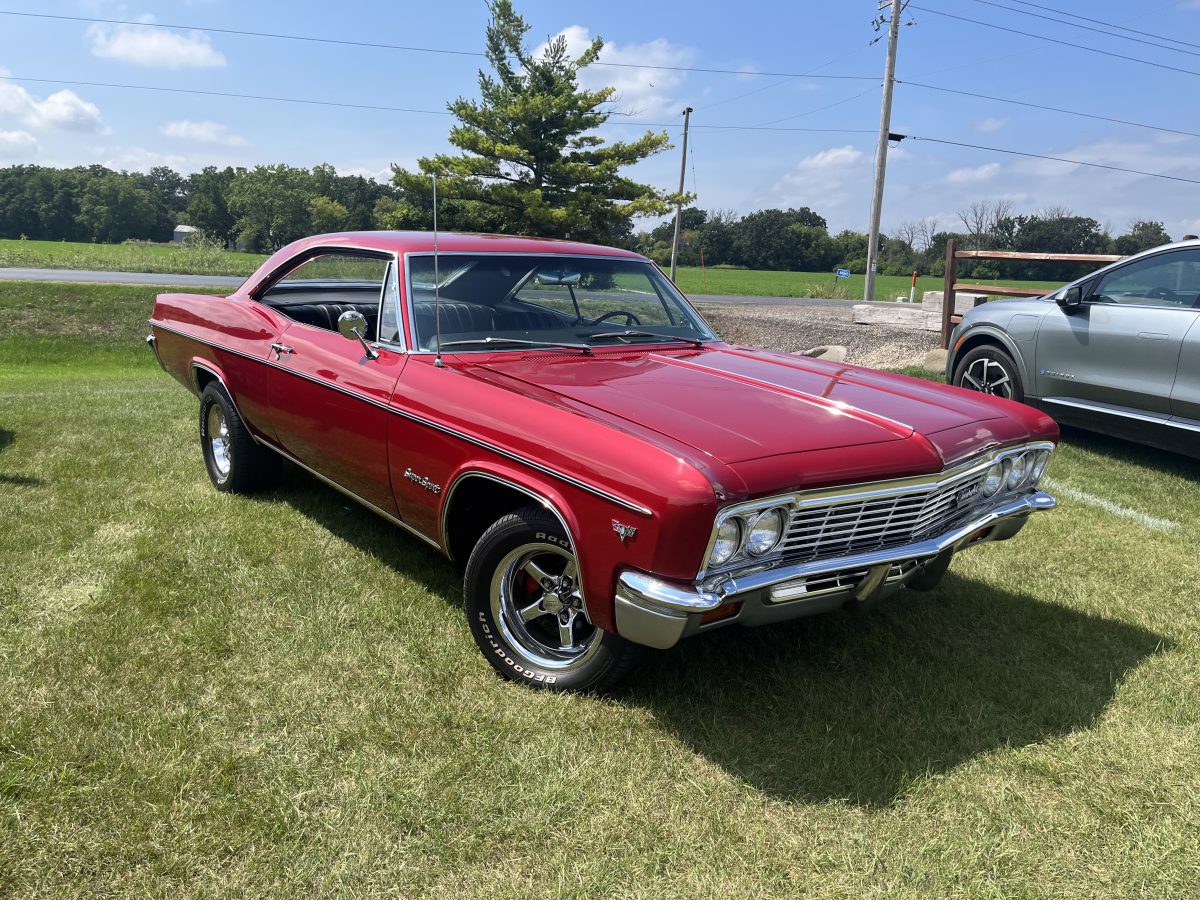
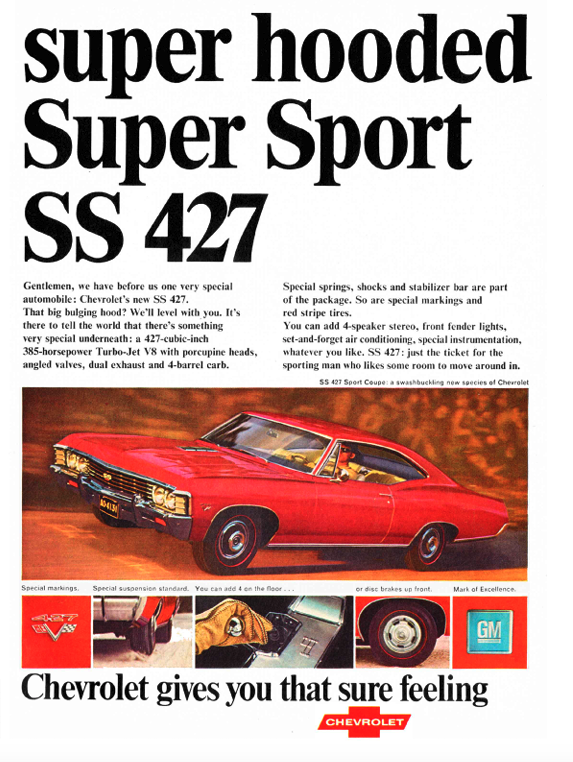
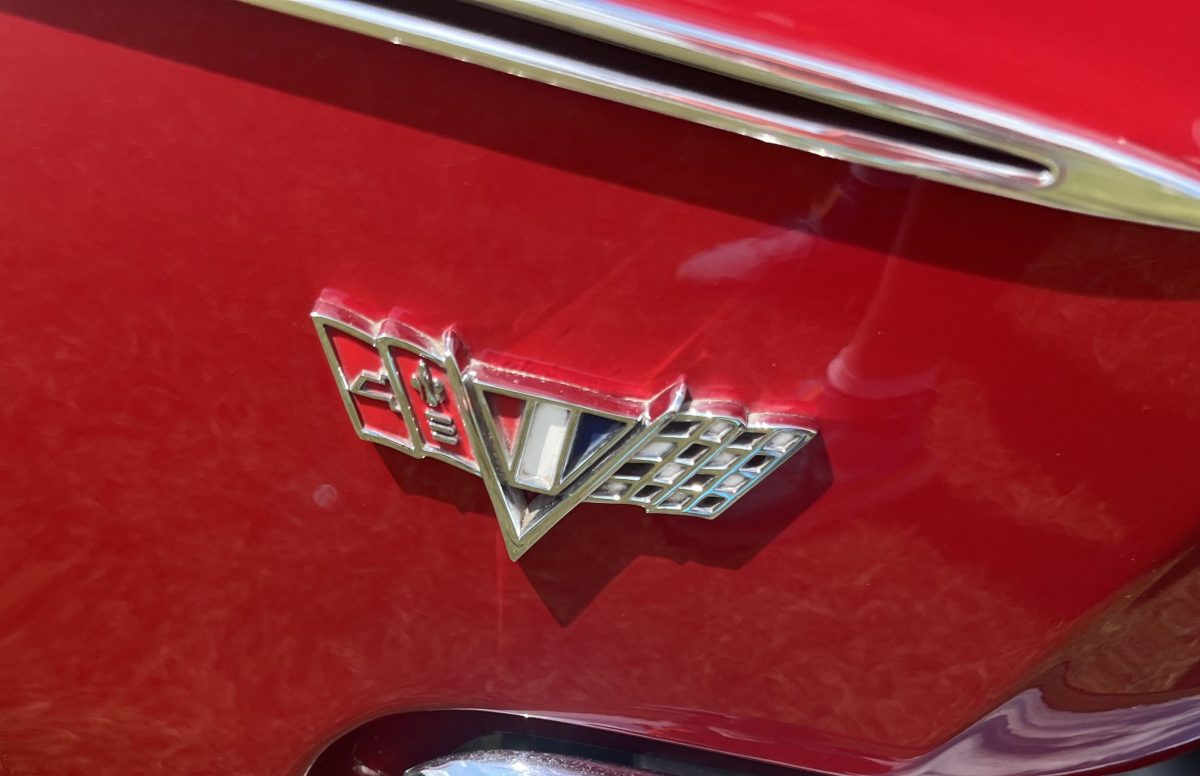
The Super Sport option was introduced in 1961, and the legend had begun. By ordering “Impala Super Sport Equipment, RPO-240,” you got SS emblems on the decklid and rear quarter panels; full wheel covers with simulated knock-off centers; and black wheels, no matter what color the rest of the car was painted. Inside, there was even more fun stuff. The dash got an SS emblem and a passenger-side grab bar, while cars with floor-shift got a decorative housing around the shift lever topped with an aluminum trim plate and the Impala/crossed flags emblem. But let’s not forget all the go-fast stuff: special shocks and front springs, power steering, and brakes with metallic linings, 8×14 four-ply thinline rayon whitewall tires, along with a tachometer. You could get a 1961 SS Impala with one of the 348s and even a Powerglide, but the hot (and today rare) setup was the 360-hp 409 with a T-10 four-speed and Positraction. The 0–60 mph acceleration time for a 1966 Chevrolet Impala SS ranged from 6.9 to 7.9 seconds, depending on the engine and transmission option equipped.
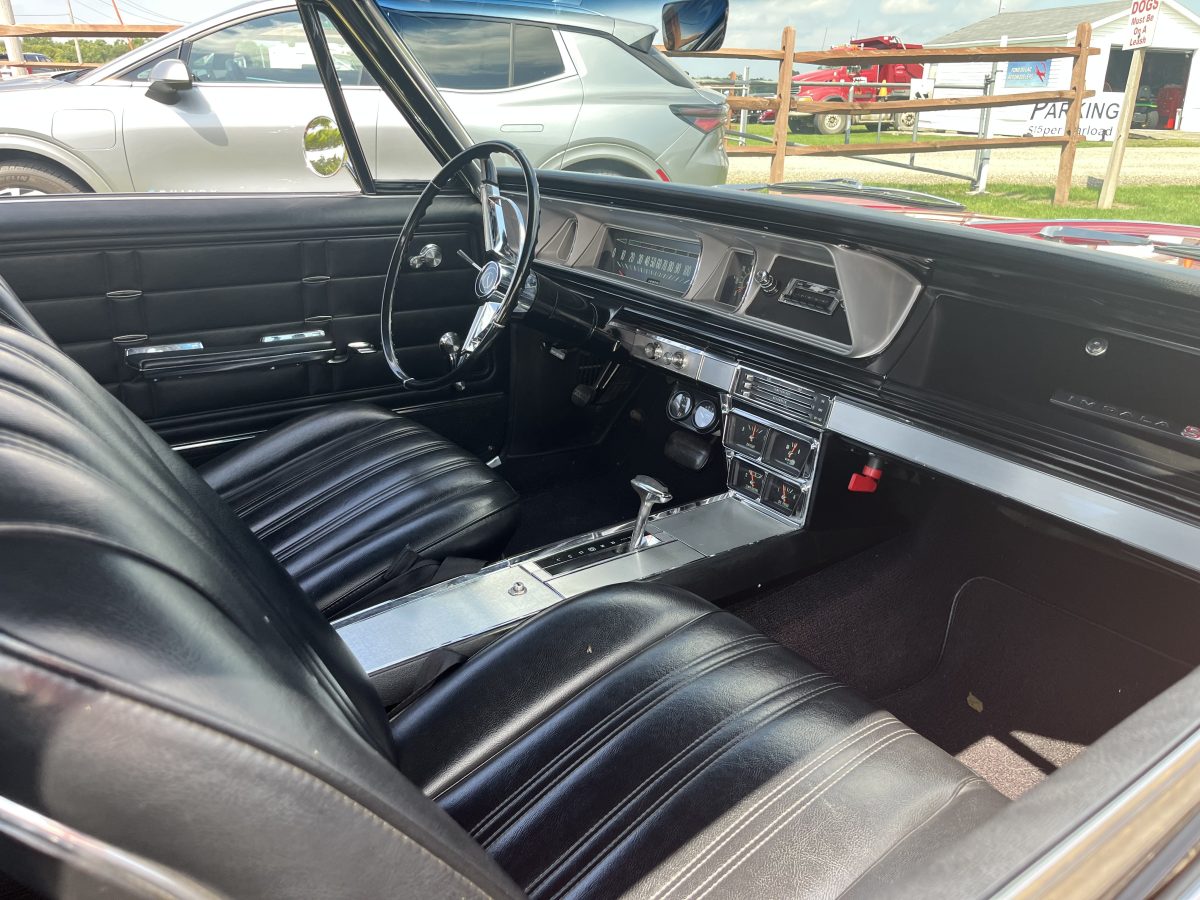
The biggest ’66 Chevrolets were able to keep up with the Corvettes and Novas of the time by ordering the optional 325-hp 396, as well as the 390-hp and 425-hp 427 in any full-size passenger car. The 425-hp L72 was an engine built for racing with 11:1 compression, four-bolt mains, forged pistons and crank, a solid-lifter cam, rectangle-port heads with 2.19-inch intake valves, a Holley carburetor stacked on an aluminum high-rise intake manifold, and deep-groove pulleys.
The automotive press really liked the car. Hot Rod magazine wrote, “What really separates the Impala SS from some of the other muscle machines we’ve driven is the suspension–the ride, the handling, all of it–as a package. On its own, you don’t think much of it as you drive–the ride is smooth but controlled, not floaty or crashy, and despite the heft of the whole package, it stays put when you chuck it into a bend.”
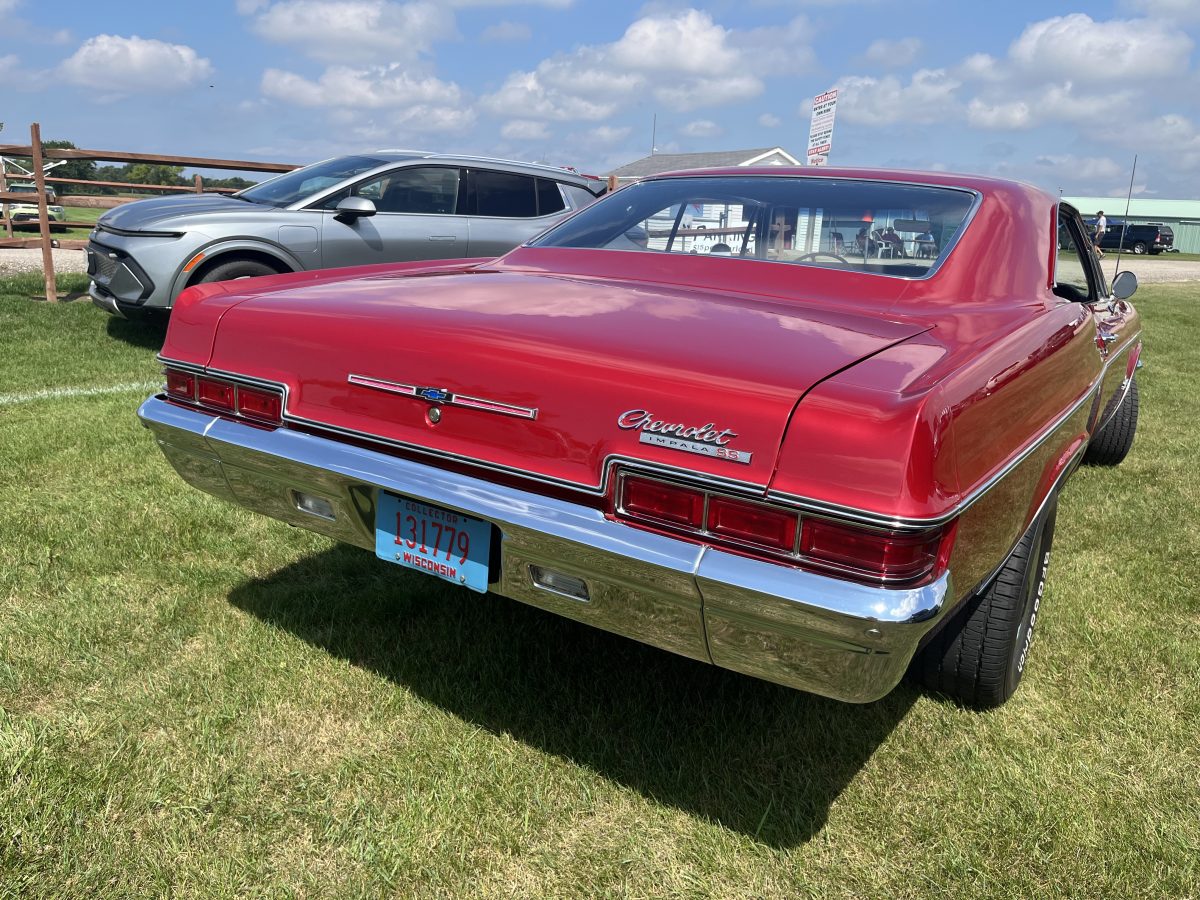
Owners had mixed reactions. They liked the smooth ride quality, timeless 1960s muscle car styling, comfortable cabin value, and an extensive aftermarket for engine and suspension swaps. What they didn’t like was the car’s susceptibility to rust in the lower front fenders and rear quarter panels, loose steering/idler arm wear over time, and heavy manual clutches or manual brakes on unassisted factory builds.
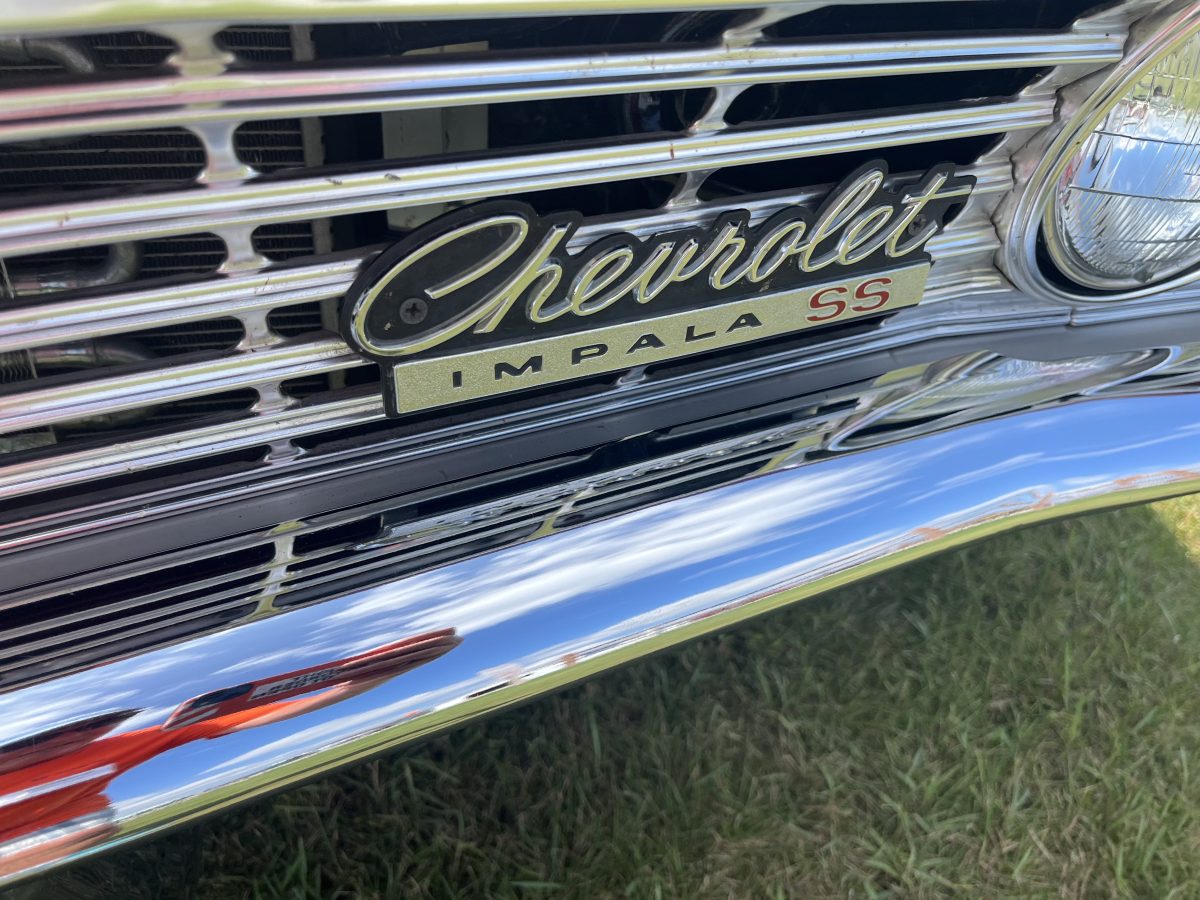
A total of 654,900 Chevrolet Impalas were produced for the 1966 model year, while there were 119,300 units with the SS package, including about 900 six-cylinder SS models and 118,400 V-8 SS models, so finding one of these gems won’t be too difficult. Keeping in mind how prone to rust, especially those living here in the Upper Midwest, Hagerty says one in Good Condition will run around 54 grand. That’s a lot of car for that kind of money.
Thanks for stopping by and checking out this week’s find. I’ve got plenty more in the hopper, so check back next week. Be sure to Like, Comment, Share as we love to hear from our readers. Have a great week.


Leave a Reply